From Lima, we flew to Cusco, met our guide and driver, and headed into the Sacred Valley. Before reaching our hotel, we already had a full day ahead of us.
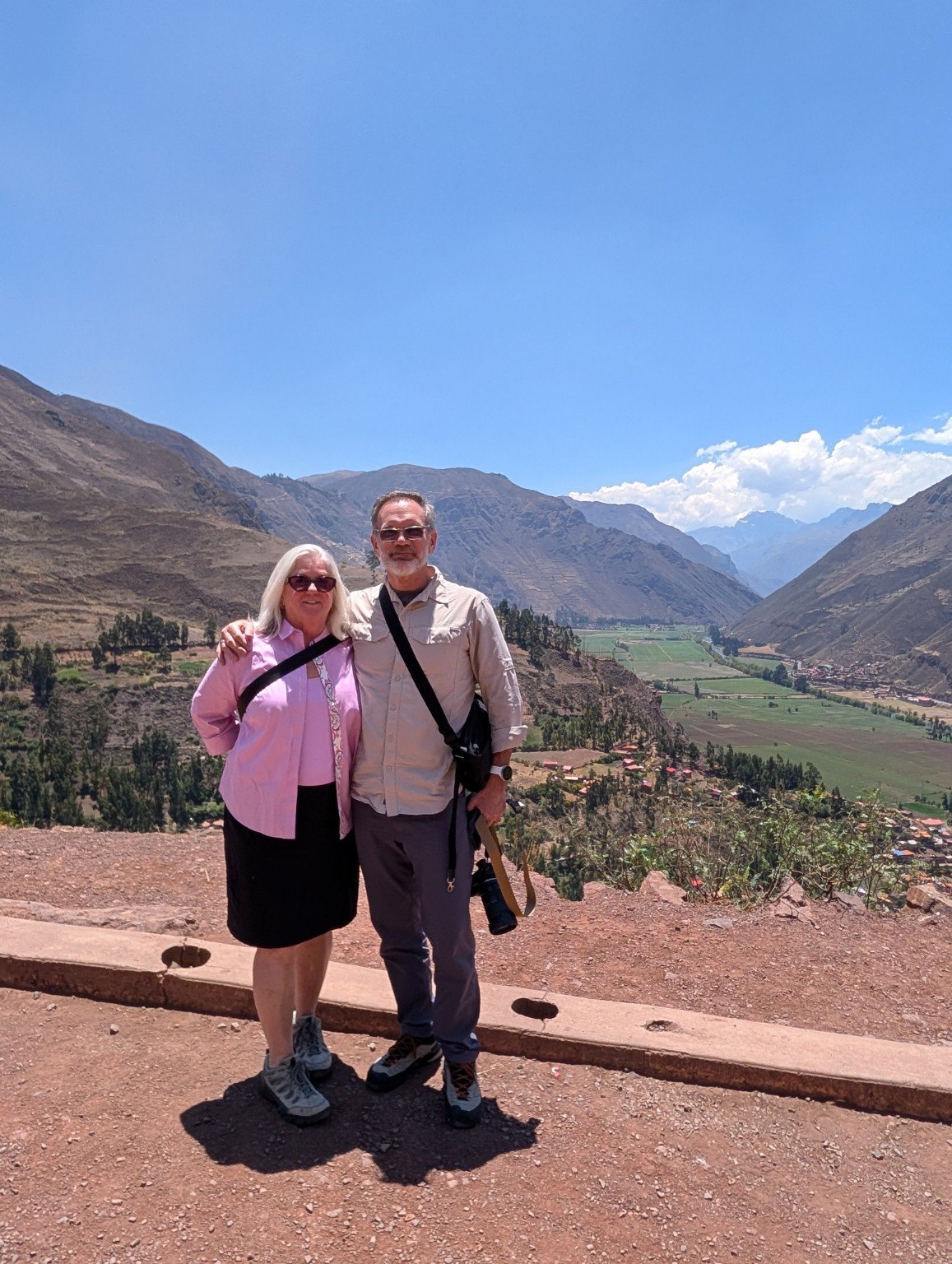
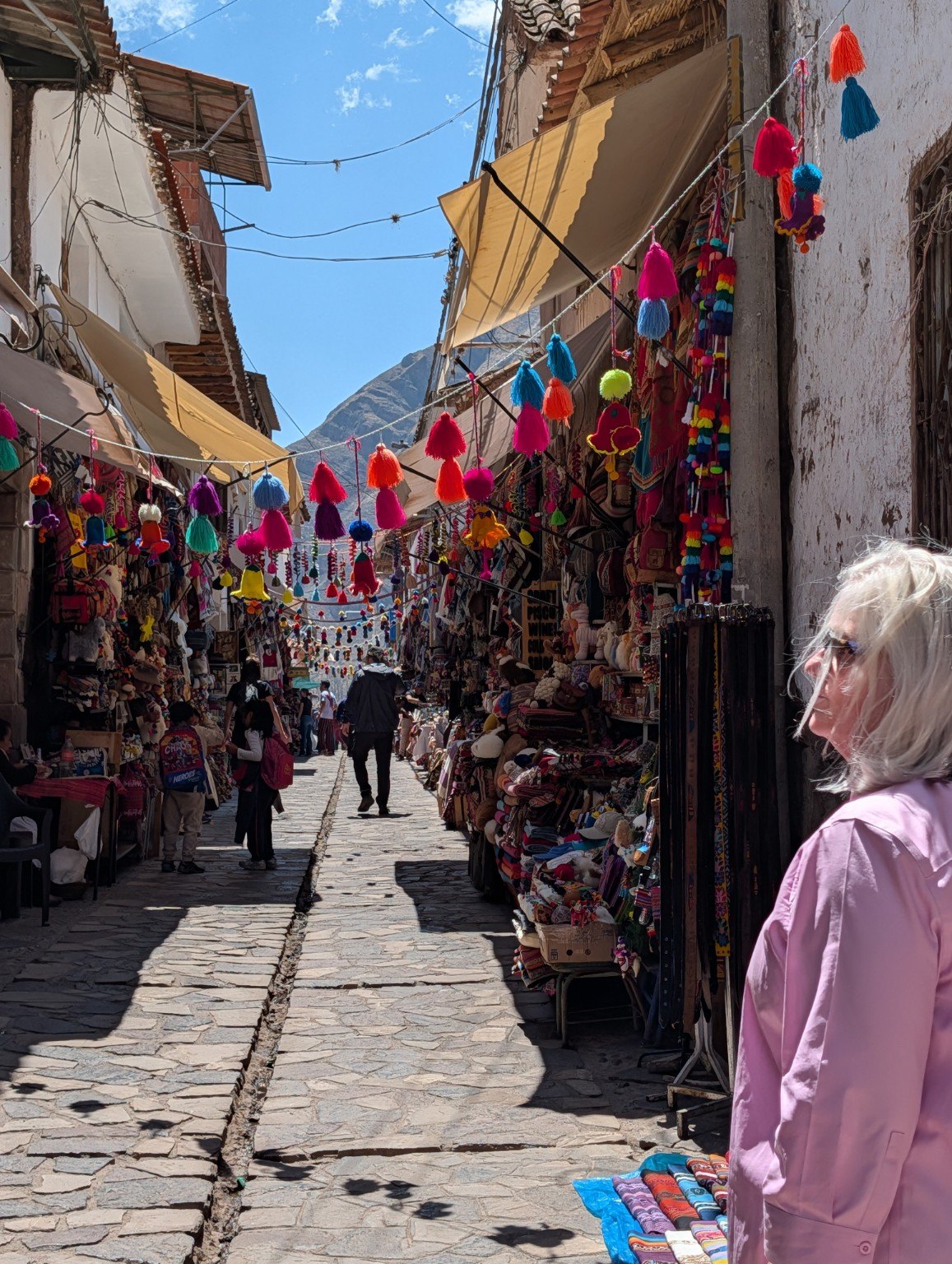
We stopped in Pisac, wandered through its colorful market, and had lunch at Hacienda Sarapampa, a beautiful working farm. A tour of the grounds followed by a wonderful meal made for a very good introduction to the valley.
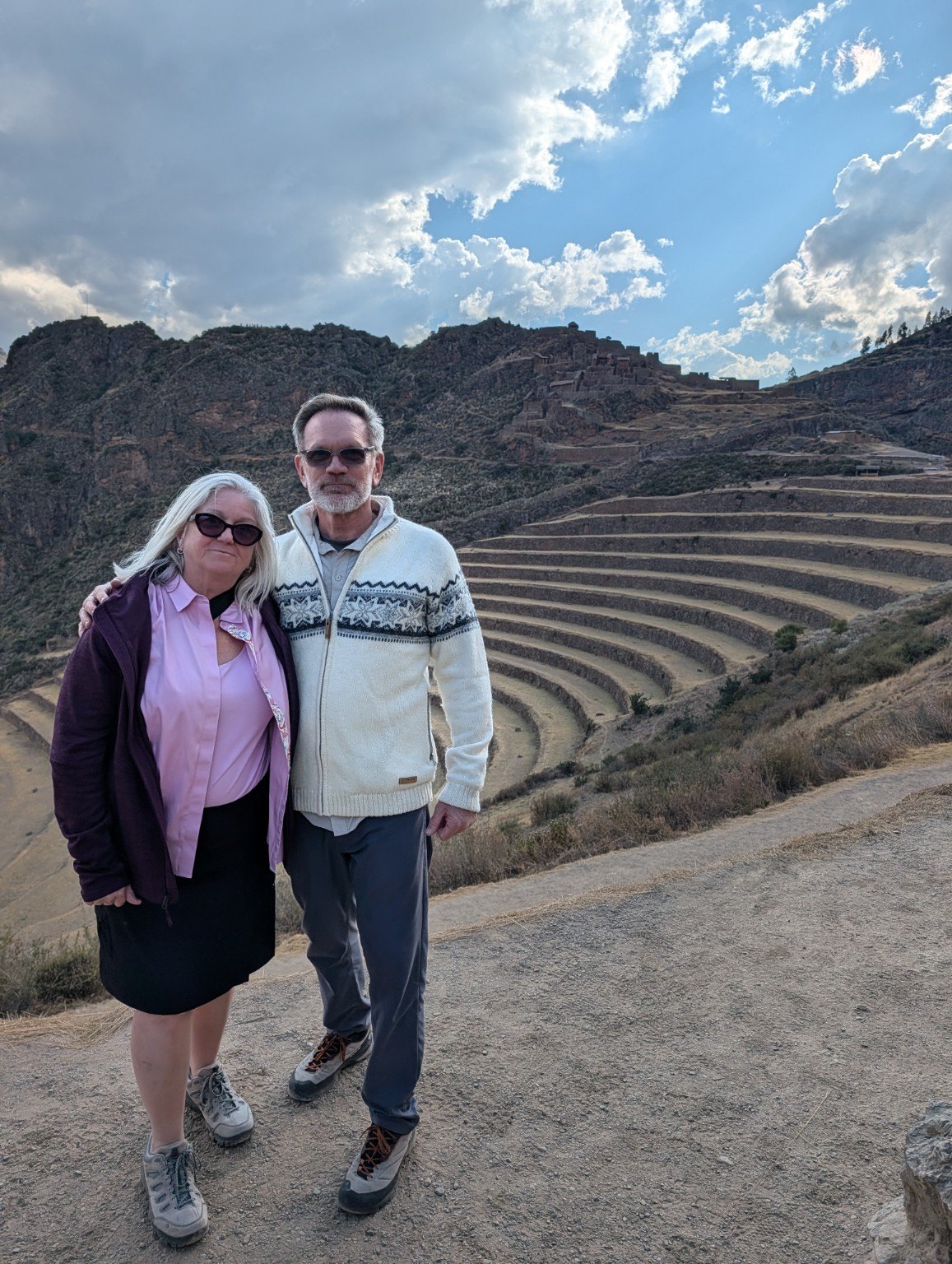
Then we visited the archaeological site above Pisac, where terraces follow the contours of the mountainside. It was the beginning of a question that would follow us through the next several days: how did they build all this?
Our base was Sol y Luna in Urubamba. From there, we explored different parts of the valley, returning each afternoon.
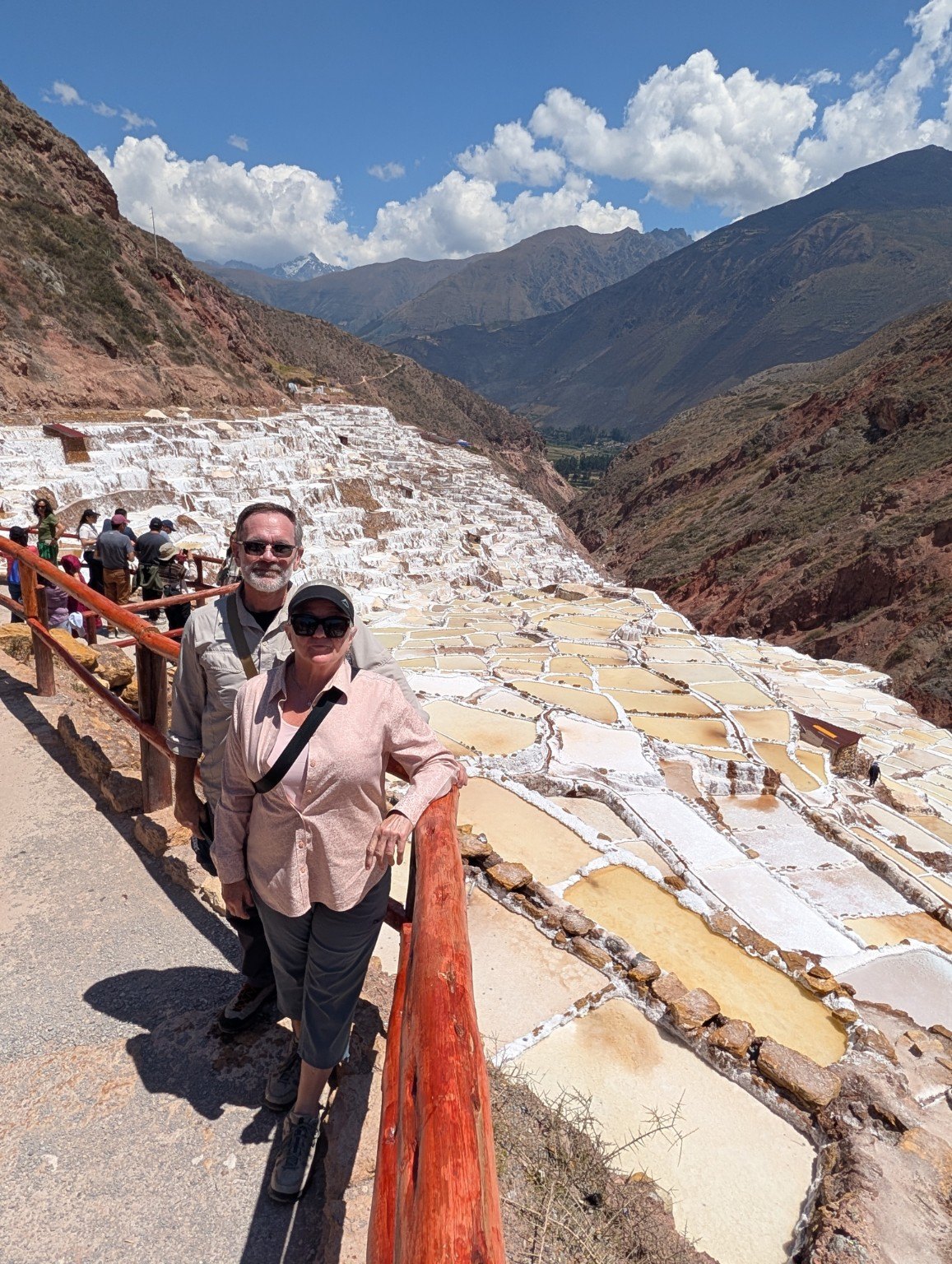
At Maras, pale salt ponds covered the hillside. Our guide explained how the ponds are worked, and we could see people tending them by hand. The view was impressive, but watching the work made us appreciate something beyond the pattern of pools. It looked like hard labor.
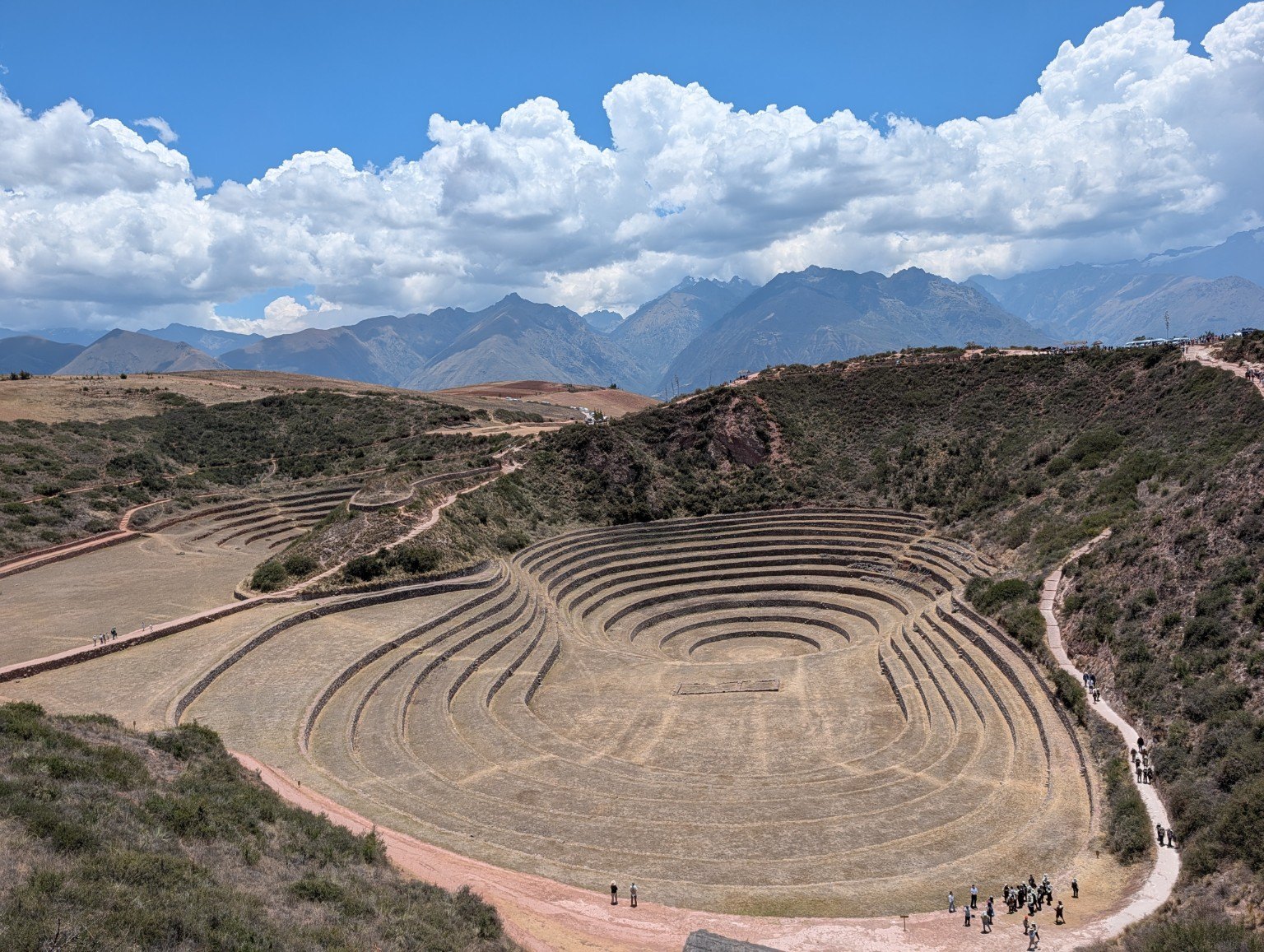
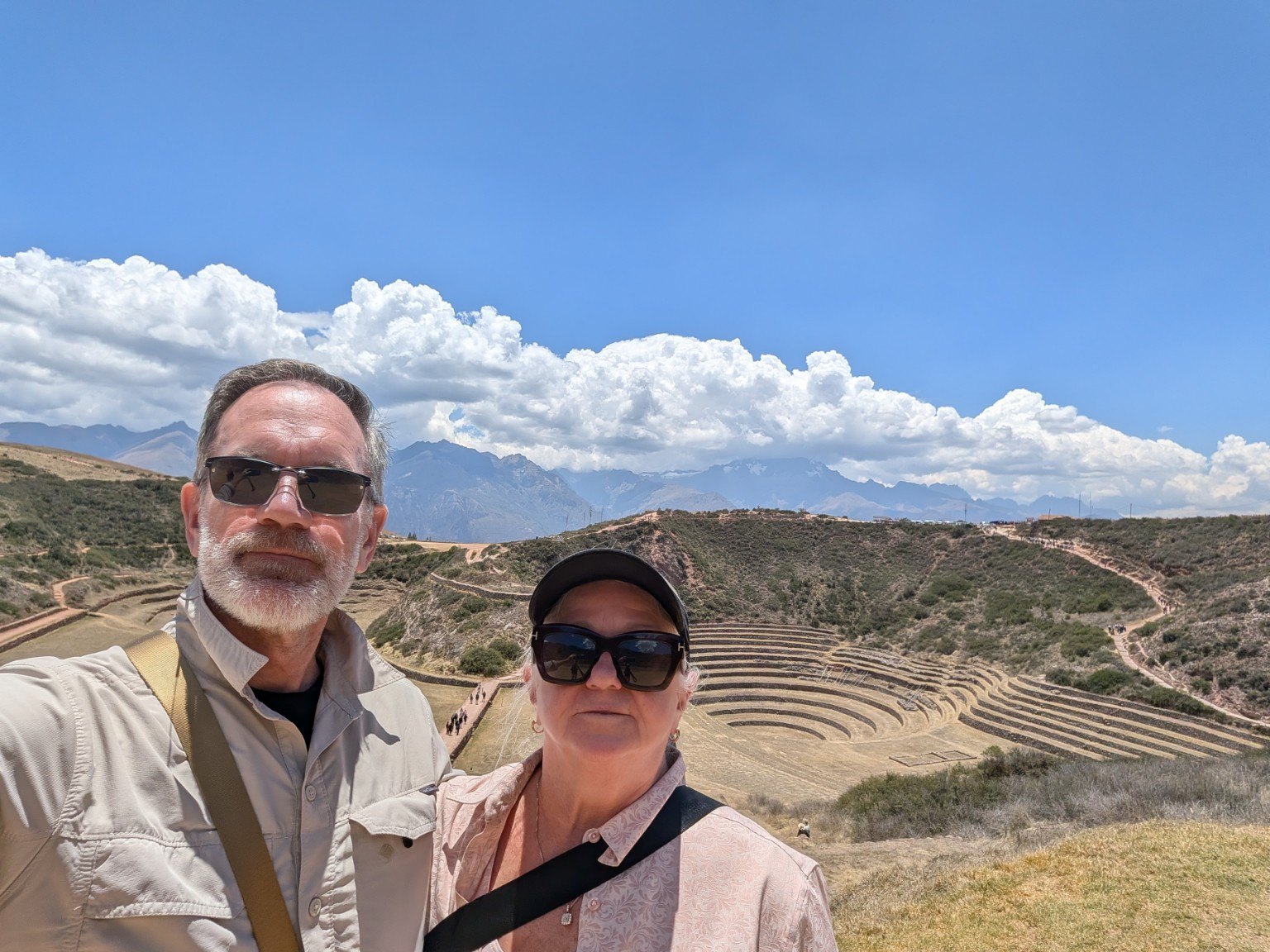
Moray offered an entirely different landscape: enormous circular terraces descending into the earth. We walked around the site, stopping for photographs with the Andes behind us.
Along the way, we visited a cultural museum where we learned about llamas and alpacas, washing and spinning wool, natural dyes, textiles, corn beer, and guinea pigs. There was a lot to take in.
Driving between stops, we passed unfinished buildings, worn facades, and newer construction, all mixed together. Some of it reminded me of poorer places we’ve visited, but I wasn’t sure that comparison captured what we were seeing. This was everyday life in the valley, and we were passing through.
Ollantaytambo was a place I would happily return to for a few days.
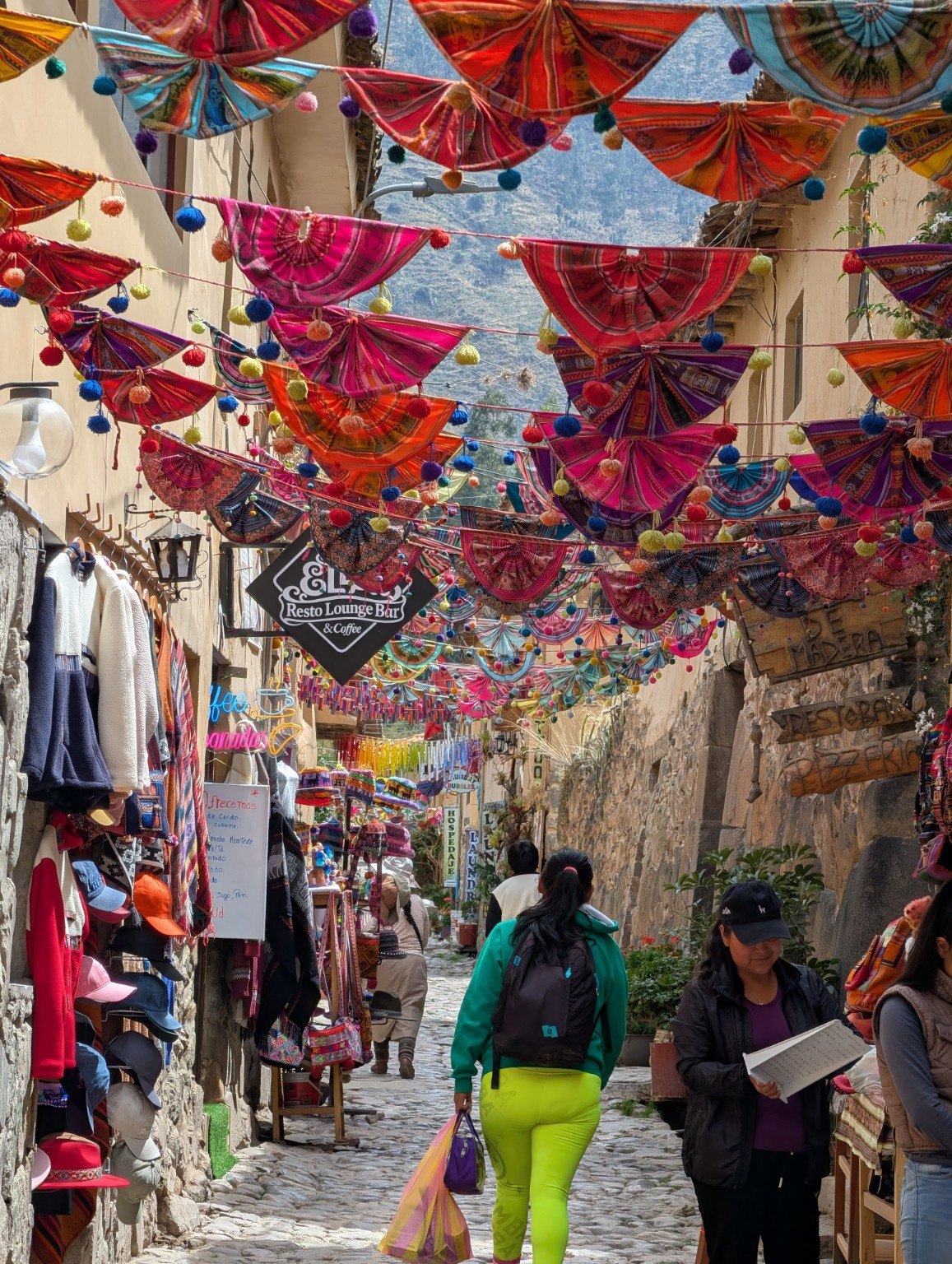
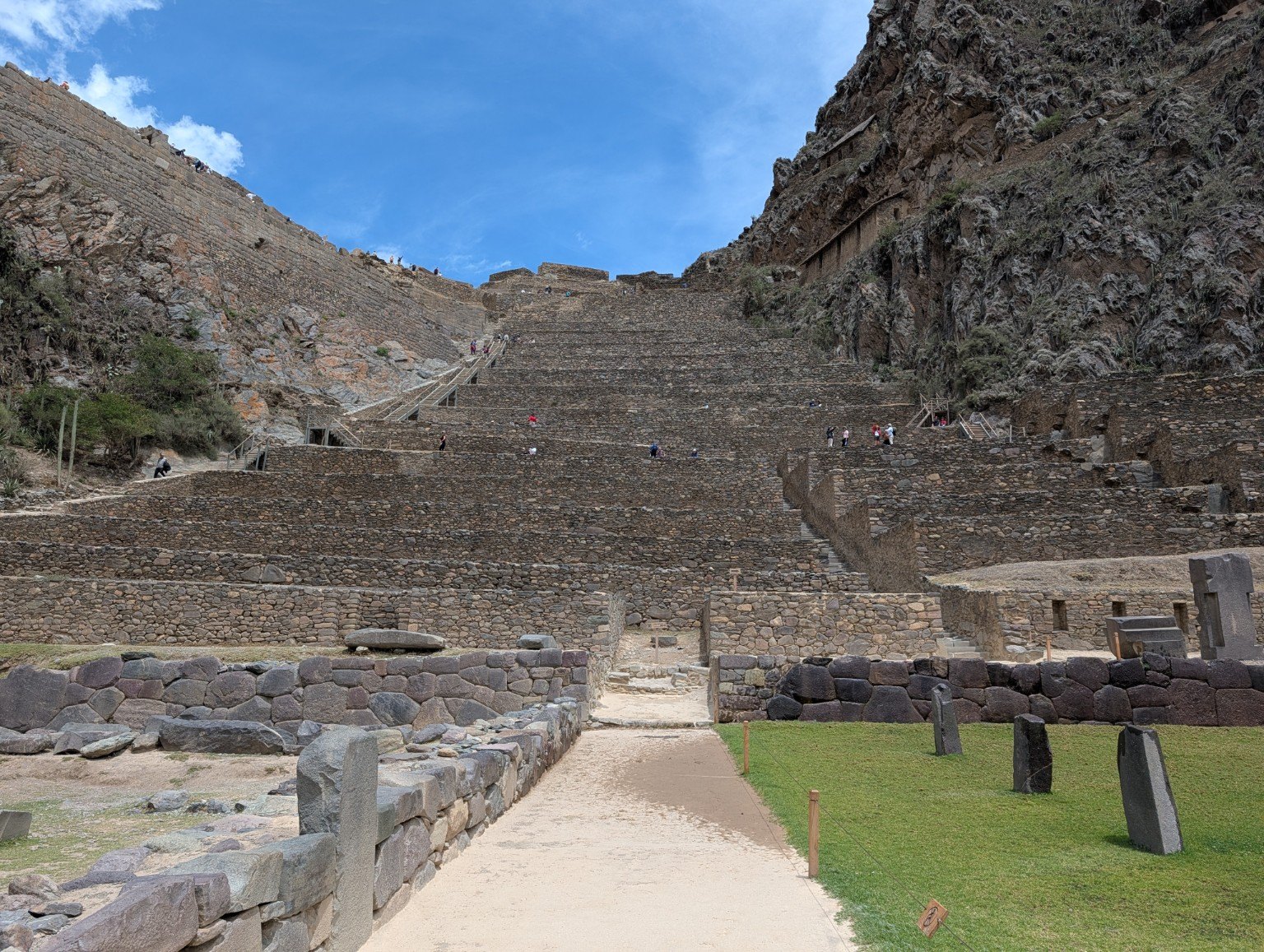
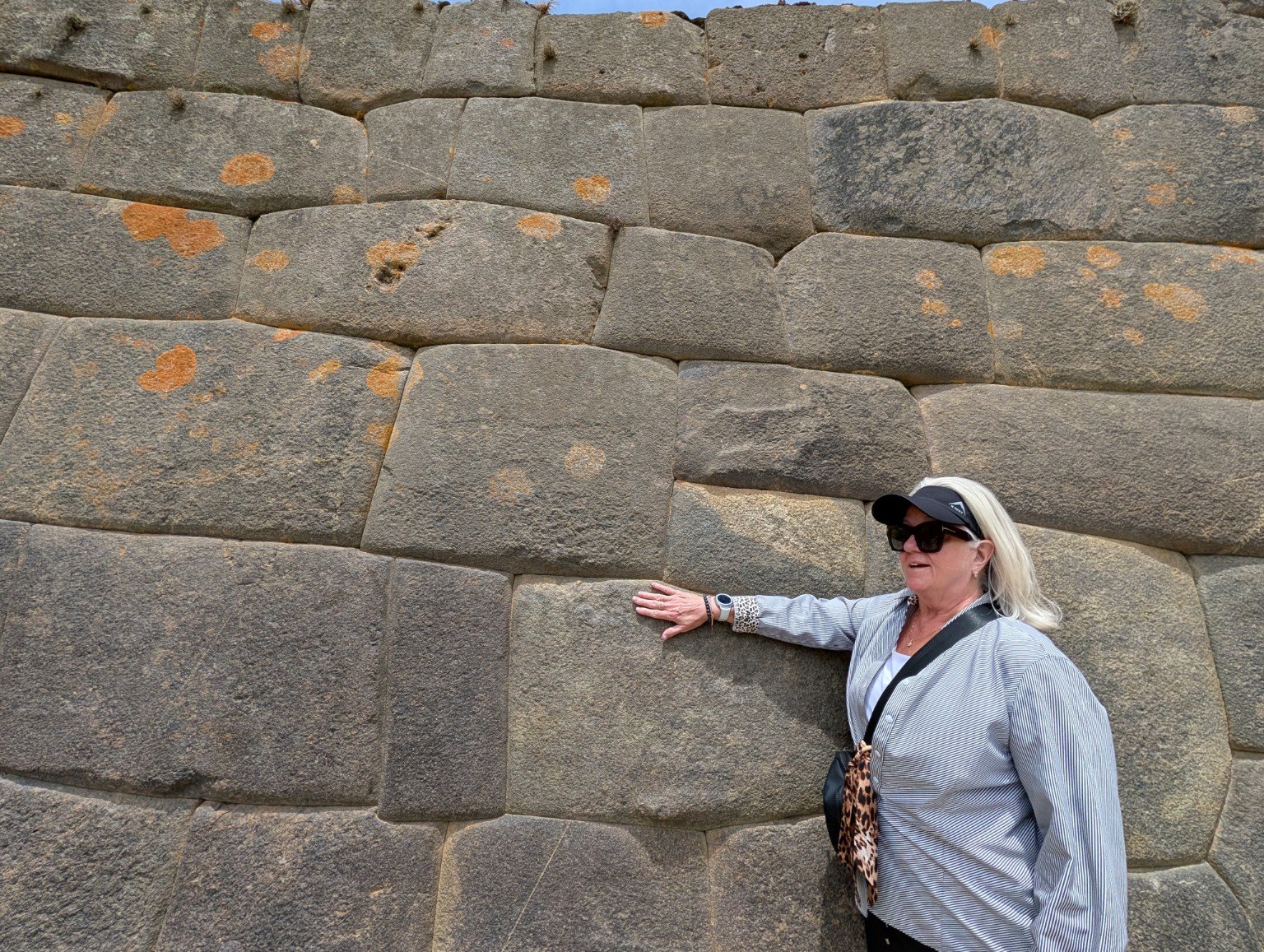
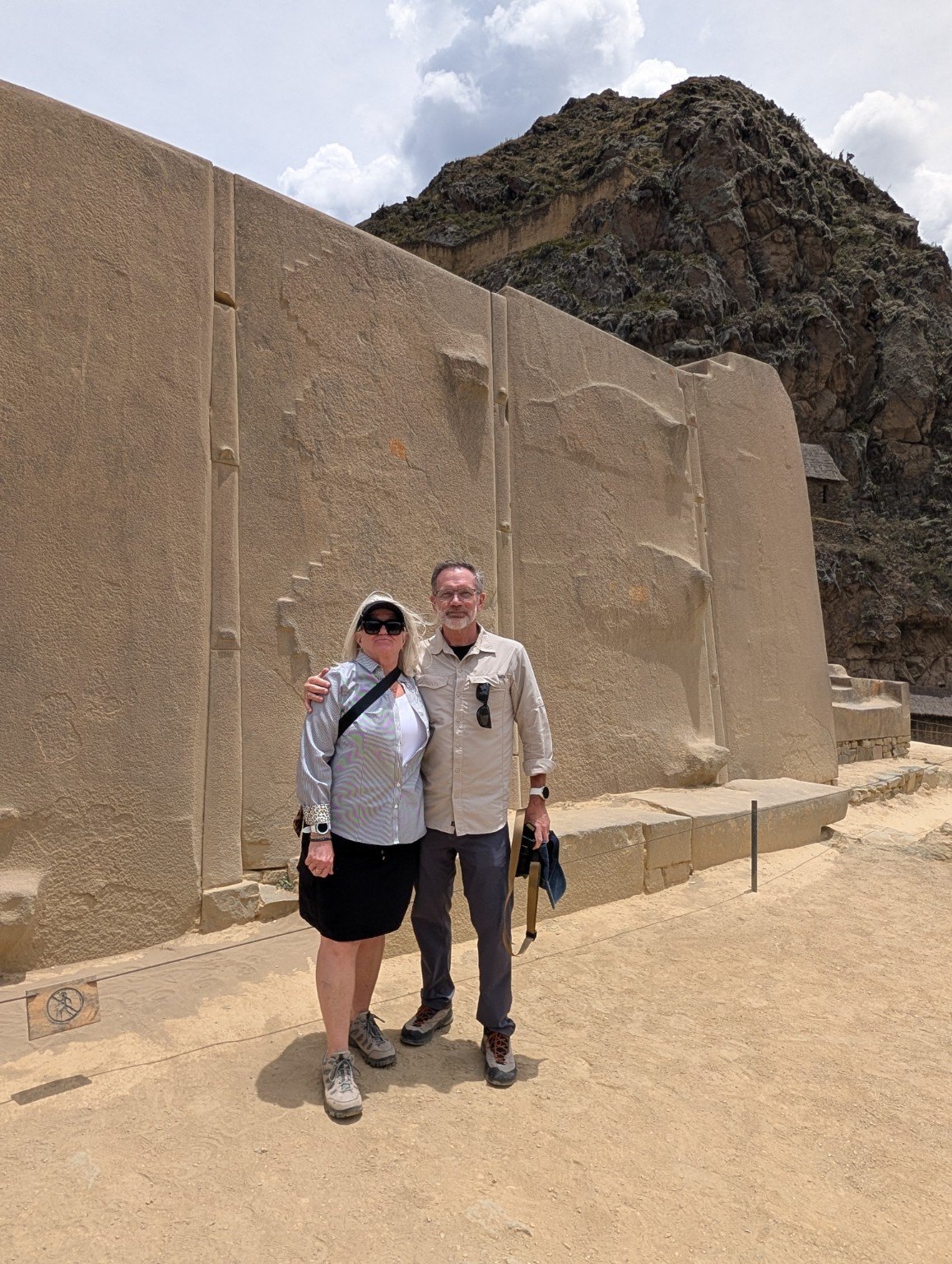
We explored the town and the archaeological site above it. Once again, the stonework was extraordinary. Moving stones of that size would have been remarkable enough. Carving them to fit together so precisely, and engineering the terraces and structures around them, was mind-boggling.
We kept stopping to look more closely.
There were also possibilities for another visit: more time in town, perhaps some via ferrata climbing, maybe even a night in one of the pods perched on the mountainside.
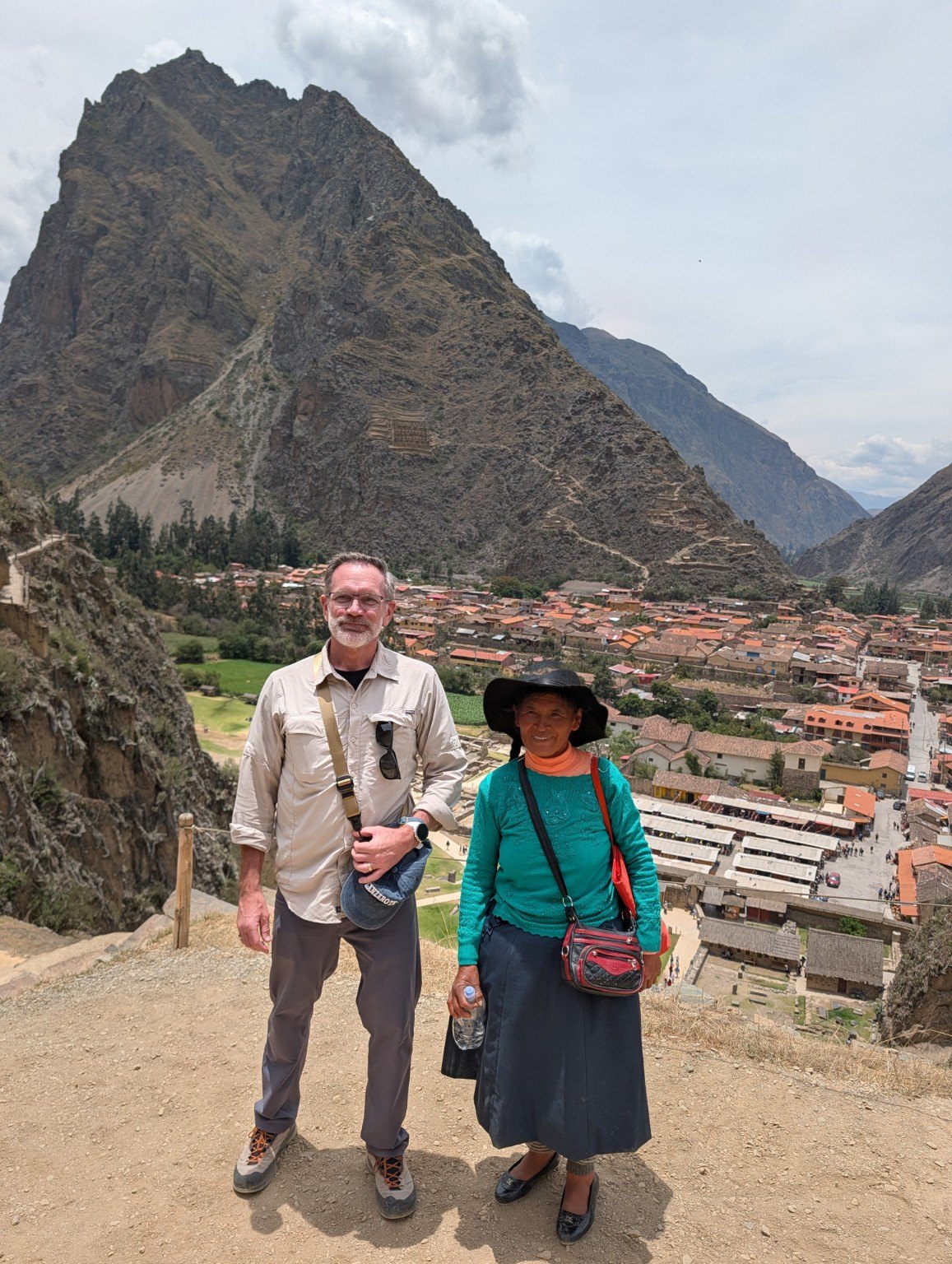
Then, while we were walking down, a woman asked me something in Spanish and gestured toward an older woman traveling with her. I assumed she wanted me to take their photograph.
She wanted me in it.
I agreed, and asked Shirley to take one too so I could remember the occasion. I never learned why I’d been invited into the photograph.
On October 17, we left Sol y Luna for the train station at Ollantaytambo. After three days of terraces, mountains, markets, and extraordinary stonework, we were on our way to Machu Picchu.