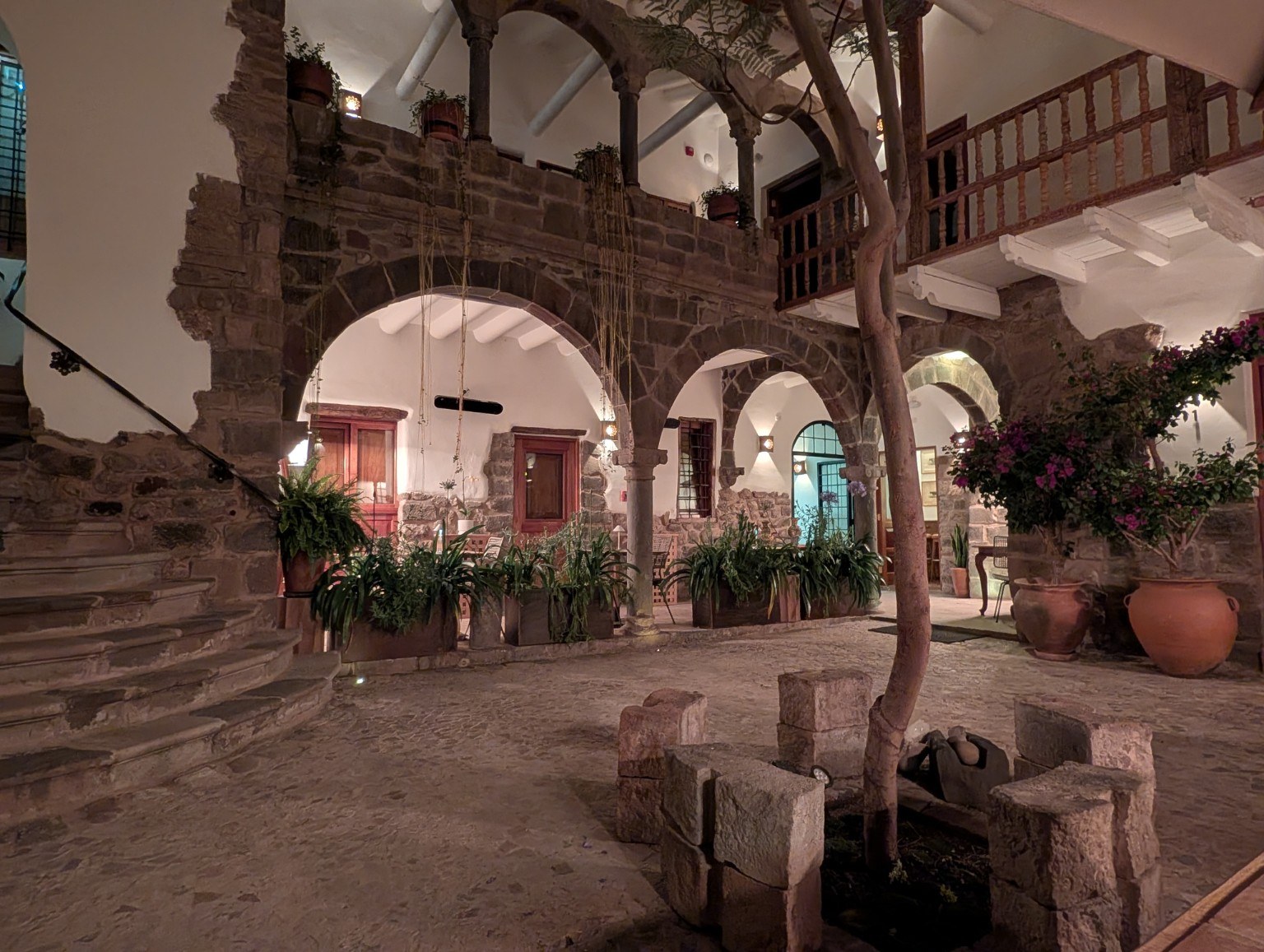
We arrived in Cusco after our second visit to Machu Picchu, returning by train to Ollantaytambo and then driving through the evening to Casa Clara, our home for the next three nights.
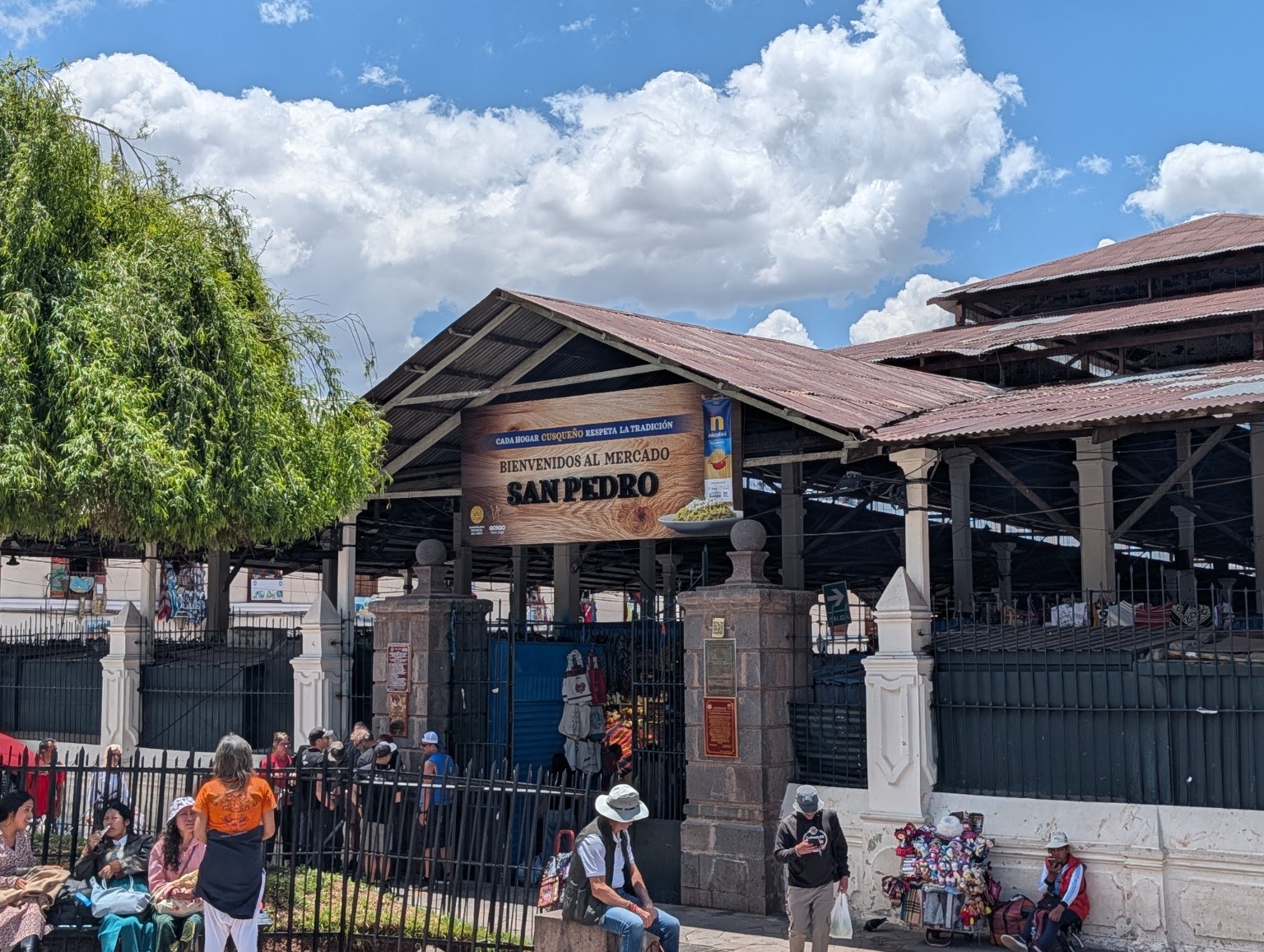
Our first morning began with an unexpected priority: getting Shirley’s phone repaired. It had stopped charging, insisting there was water in the charging port. Between repair shops, we explored San Pedro Market, where you could buy produce, meat, a meal, souvenirs, and seemingly anything else you might need. Our guide eventually found a technician who opened the phone, replaced the faulty part, and put it back together in about twenty minutes. Seventy soles—roughly twenty dollars—and Shirley was happy again. Hard to imagine that happening so easily back in Irvine.
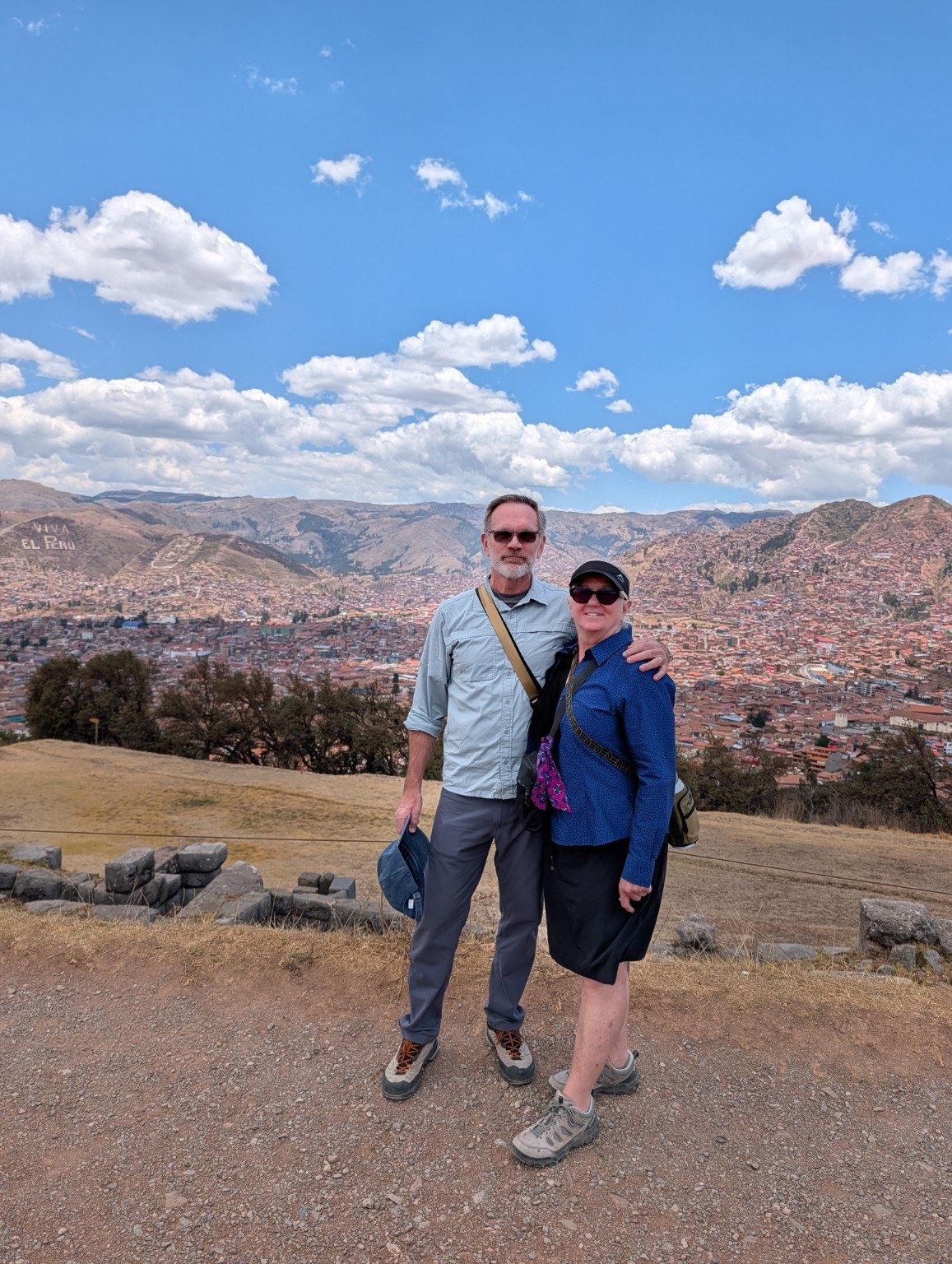
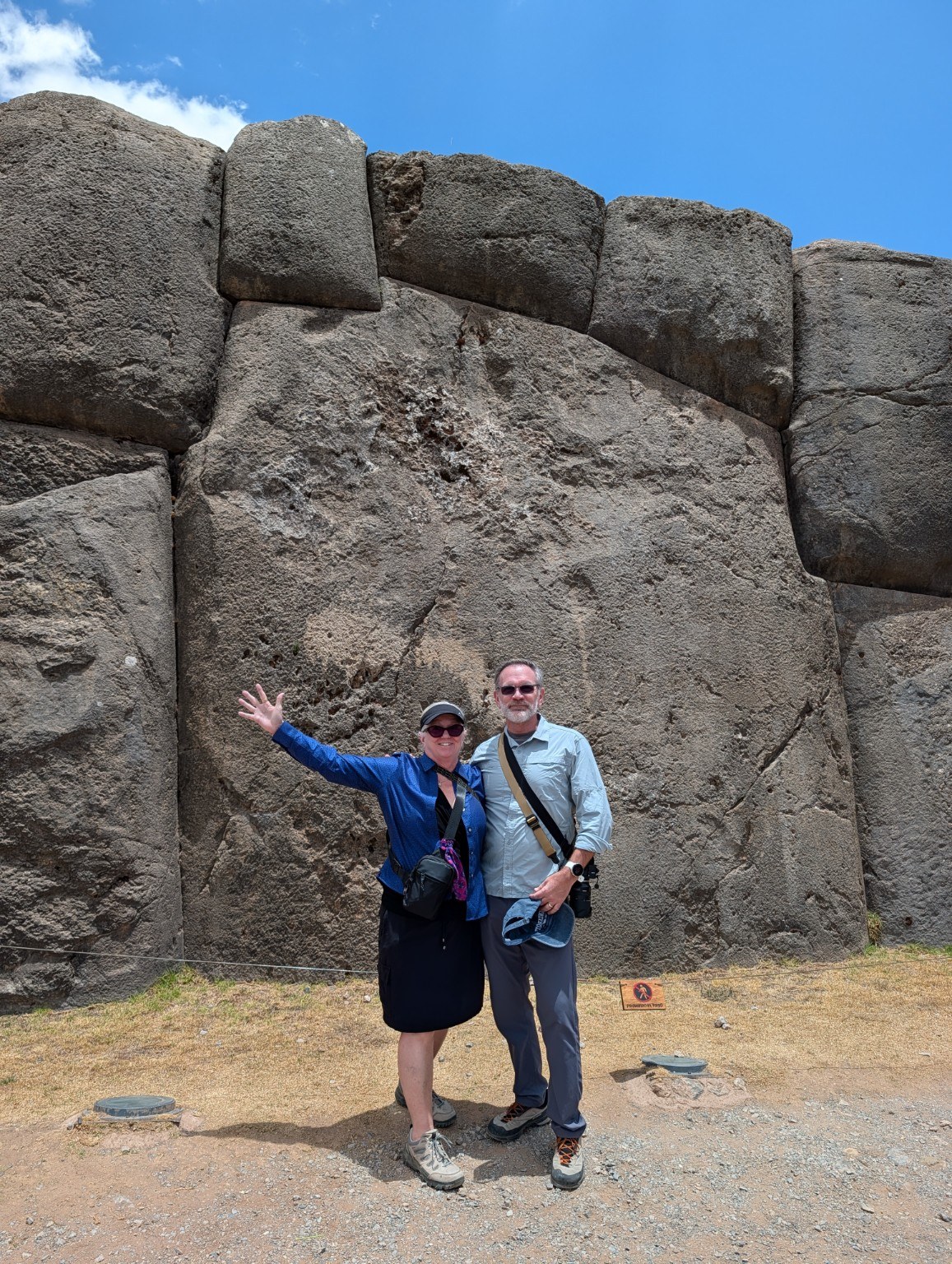
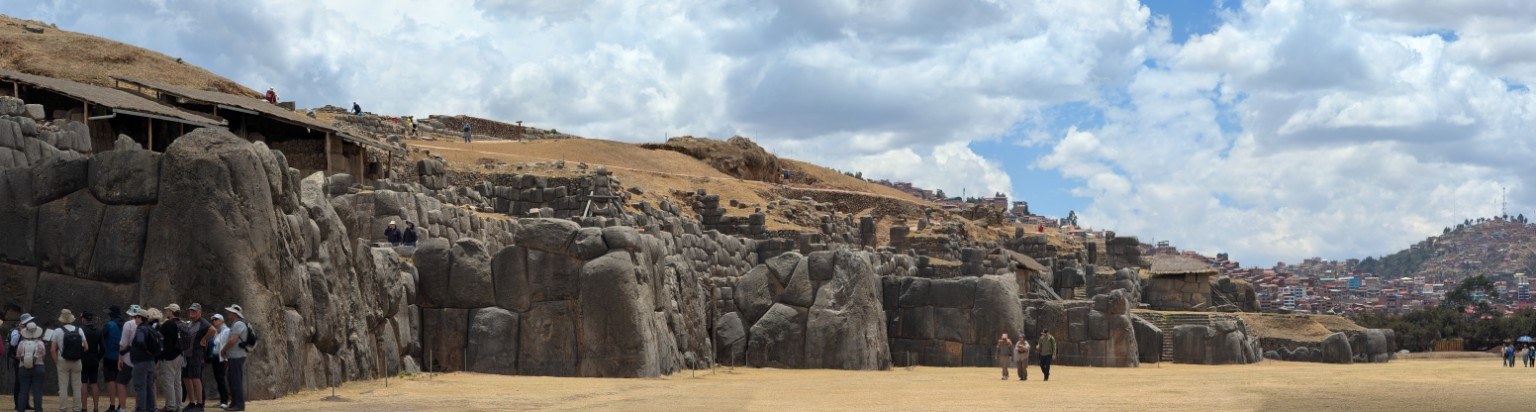
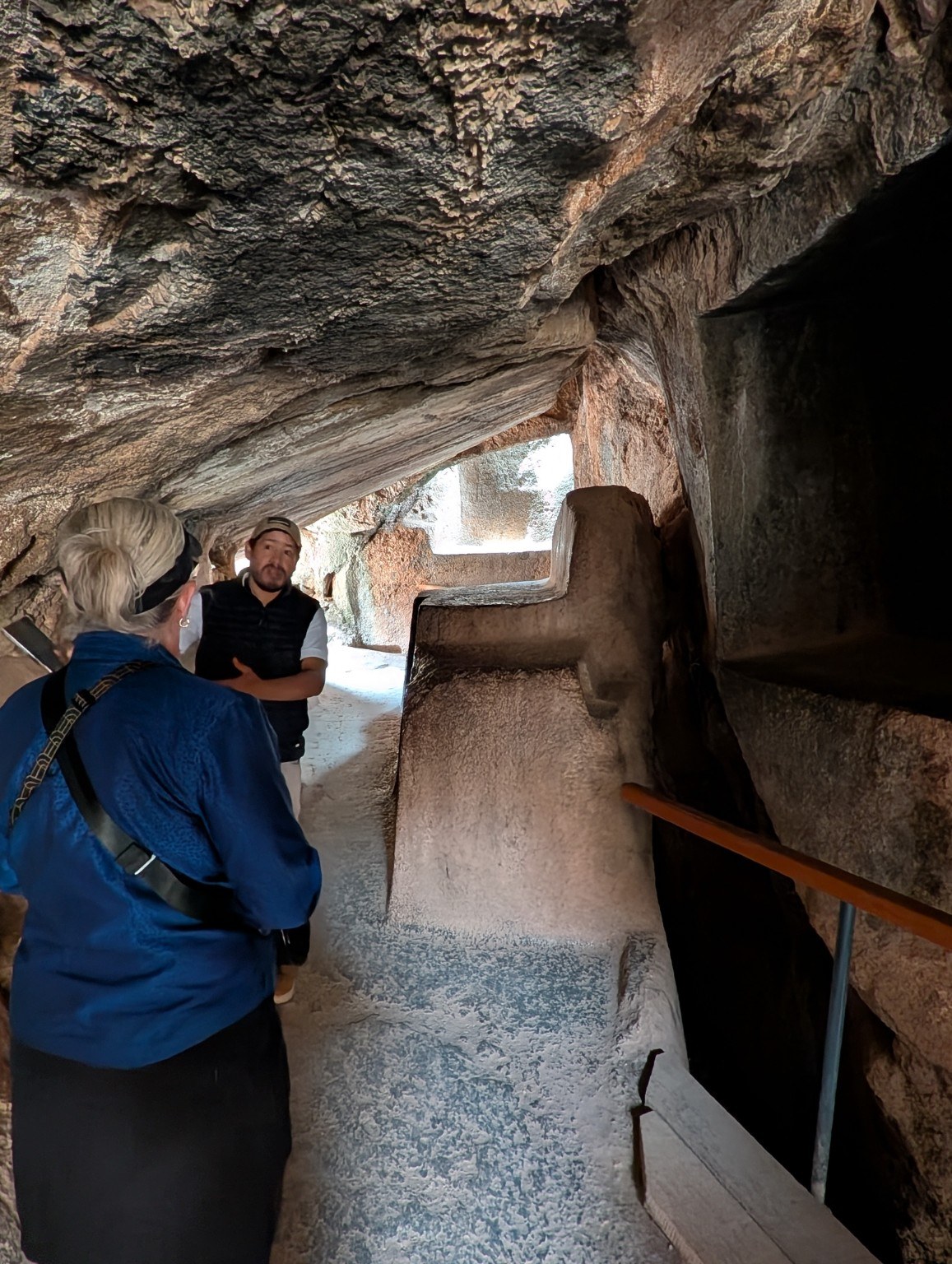
From there, we explored the history surrounding the former Inca capital. At Saqsaywaman, enormous stones fitted together without mortar made us wonder, once again, how anyone could have built such a place. Standing beside the walls gave us a better appreciation of their scale than any photograph could. Nearby Q’enqo offered a different experience: passageways and ceremonial spaces carved into the natural rock, including an underground chamber with a stone altar.
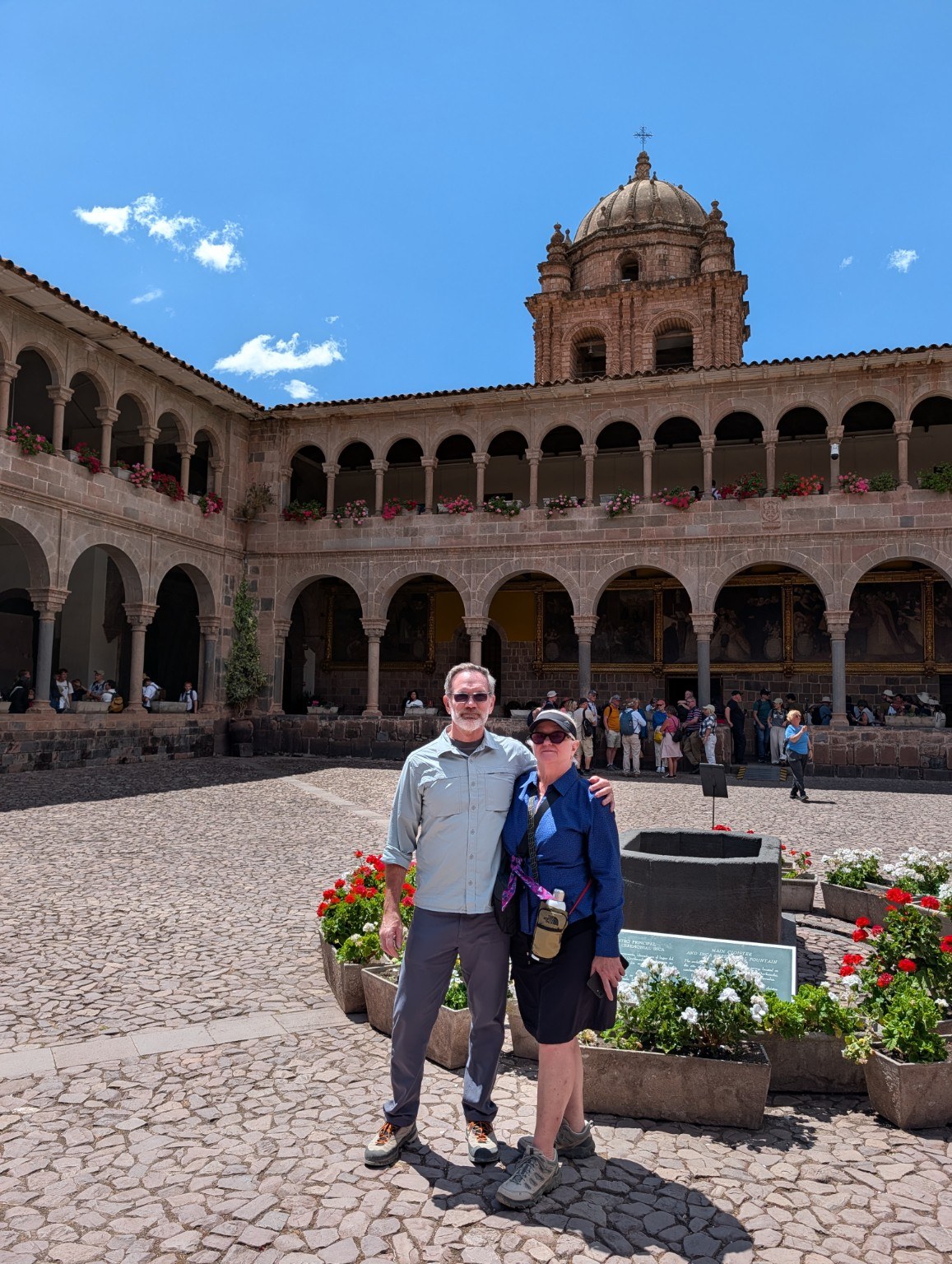
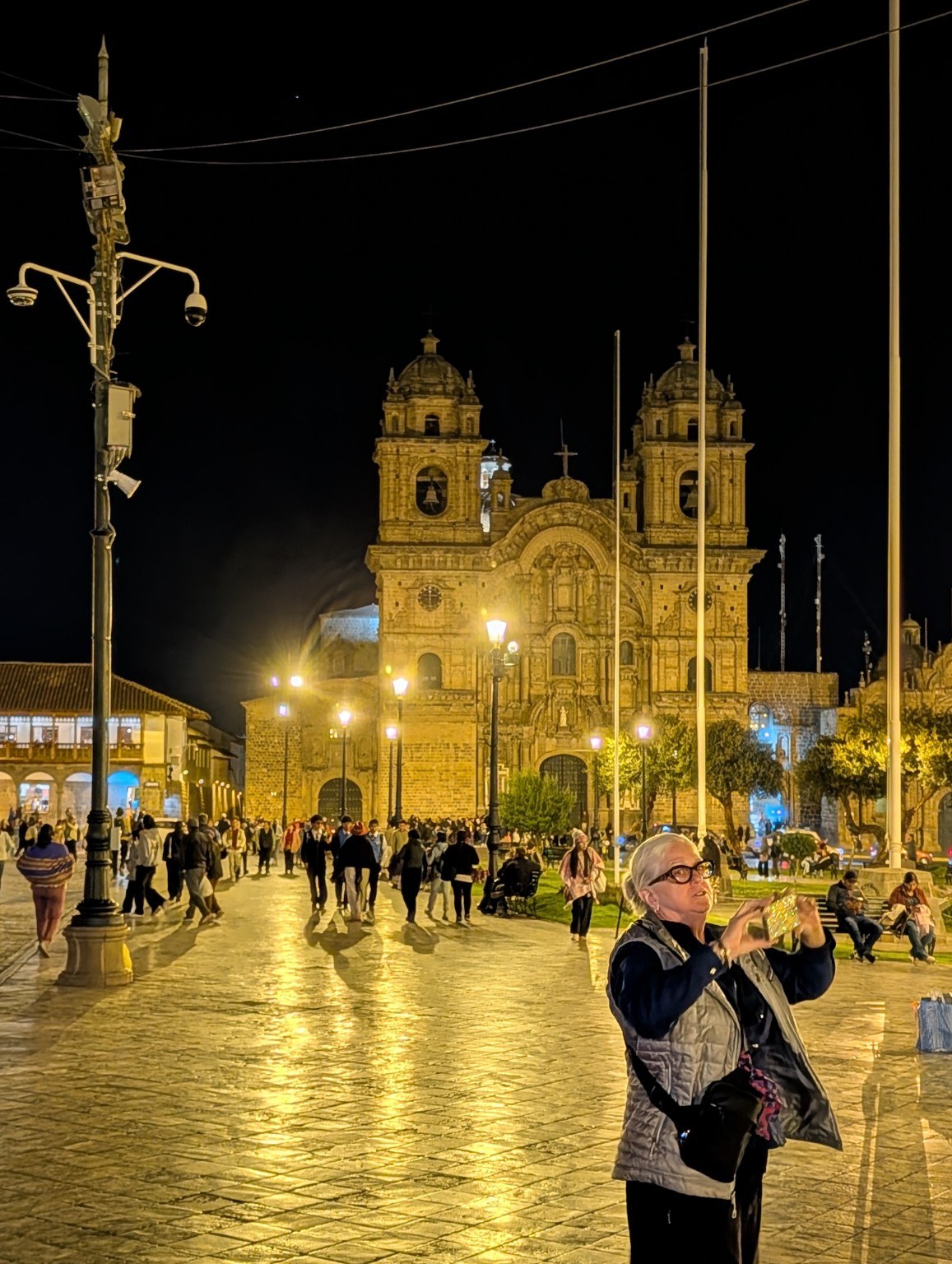
Back in the city, we visited Qorikancha and the Church and Convent of Santo Domingo, built over the Inca temple. Seeing the precise Inca stonework beneath the colonial architecture made the history of conquest tangible. This had been one of the most sacred places in the empire, and we stood for a photograph at what our guide described as its spiritual center. Our visit to the Basilica Cathedral continued the story of a city where Inca and Spanish histories remain closely intertwined.
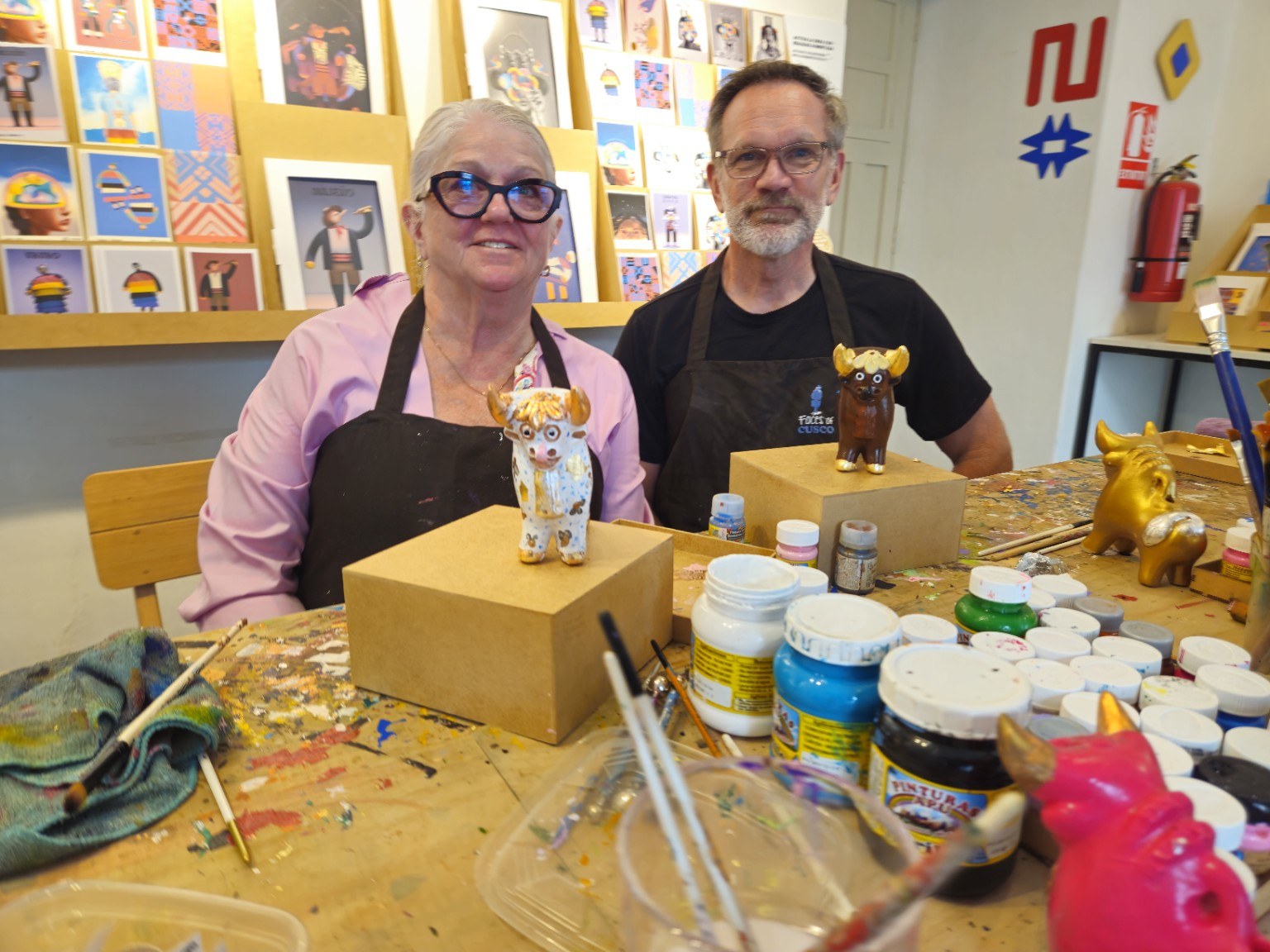
The following morning was quieter. At a local coffee shop and art studio, we each painted a small ceramic bull. Traditionally displayed together on rooftops as symbols of prosperity and protection, ours will eventually sit on a shelf when we have a home again. I had been skeptical about the activity, but ended up enjoying it—and the thought of having something we made together to remember Cusco.
There was also time for good meals, a mastermind call, booking our remaining New Zealand flights, and simply relaxing. Cusco felt busier and more tourist-oriented than our previous stops, but the people were friendly, we felt safe, and its history gave it a particular magic.
Then it was time to pack again and board the train through the Andes toward Lake Titicaca.