We arrived in Iceland on August 24, but Greenland was still the destination.
Reykjavík was initially a staging point. We checked into the Holt Hotel, found dinner nearby, and reorganized our luggage so most of it could stay behind while we flew north. At dinner, I ordered what our server was having: hashed white fish with potatoes and béarnaise. Shirley had grilled cod with mustard sauce. Both were excellent—an early hint of just how much fish we would eat over the next few weeks.
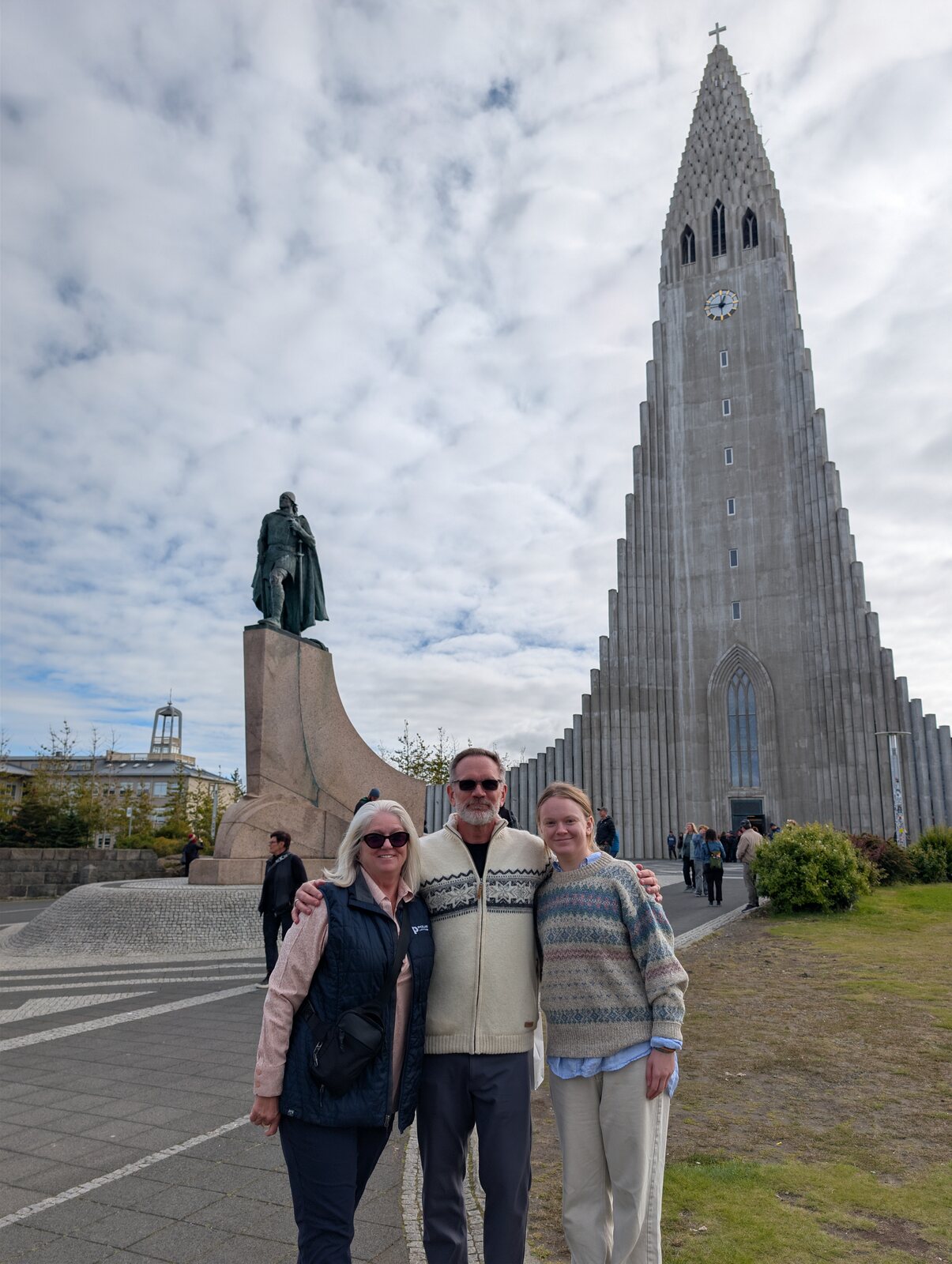
The next morning I went to the airport to collect Laura. We had breakfast, shopped for a few things we needed for the ship, walked around Reykjavík, and visited Hallgrímskirkja. By then we'd seen an increasingly long list of remarkable religious buildings around the world—Sagrada Família, Hassan II Mosque, Westminster Abbey and others. "Awesome" gets overused, but some buildings really do inspire awe.
On August 26, we left most of our belongings in Reykjavík, boarded a King Air with the rest of our small group, climbed through a solid layer of clouds and headed for Greenland.
Eight days later, we came back to Iceland seeing things a little differently.
Greenland had been vast, remote and almost impossibly empty. Iceland wasn't that. Roads went everywhere. Towns appeared regularly. Restaurants, hotels and gas stations made travel surprisingly easy.
But the landscape seemed determined to compete.
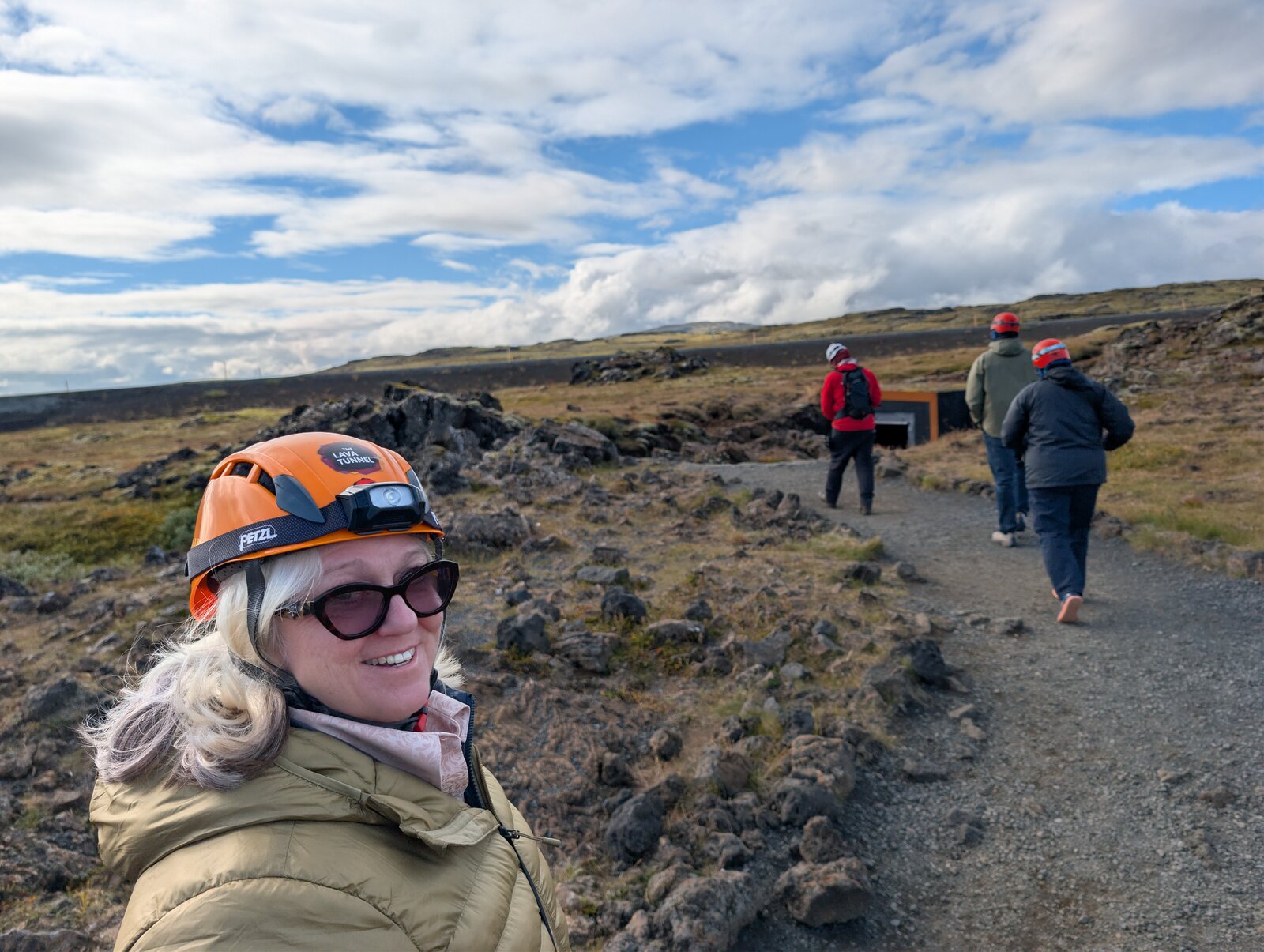
We spent our first morning back with Laura in Reykjavík before she flew home, then visited the Raufarhólshellir lava tunnel and began making our way around the country.
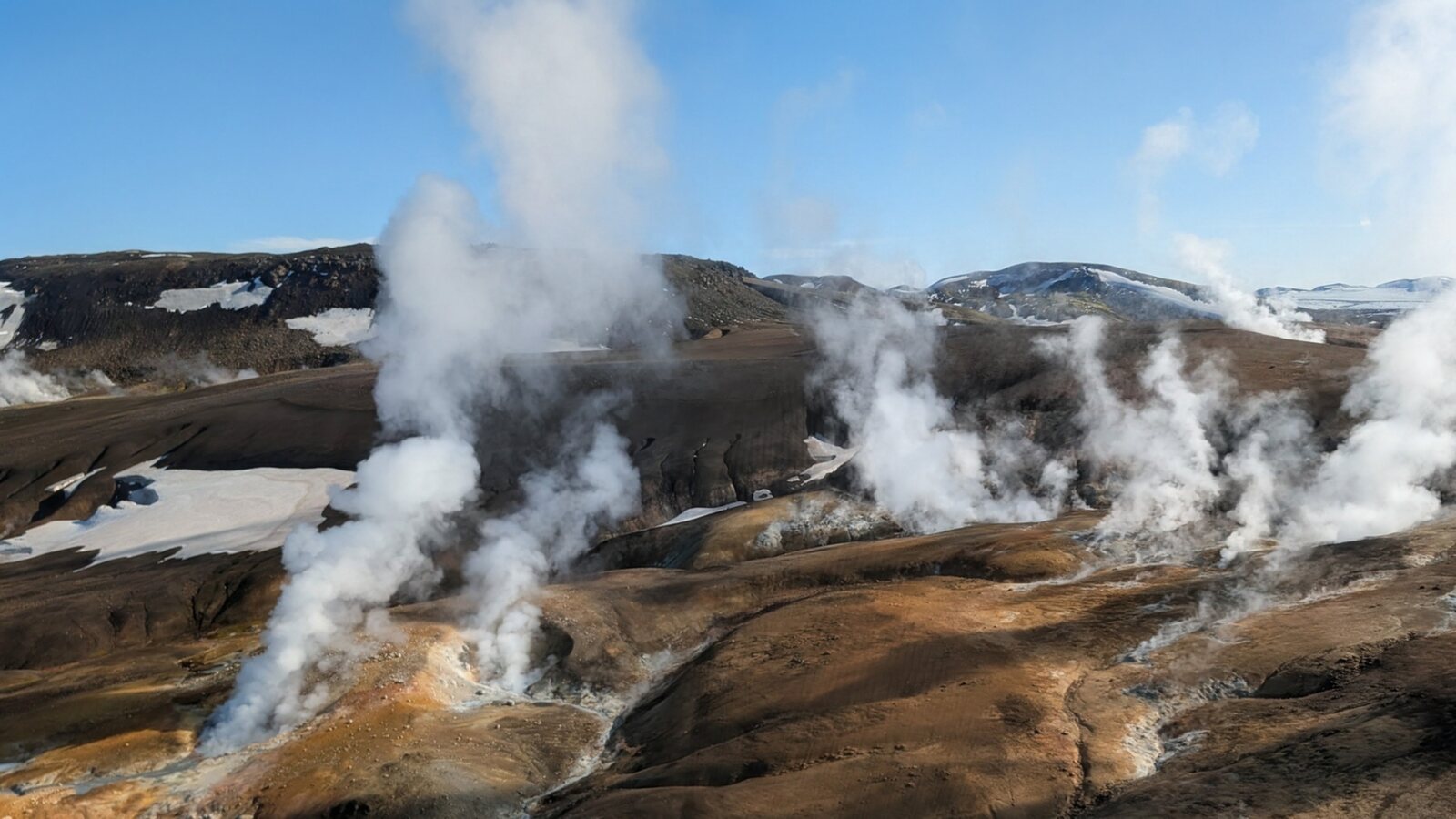
What followed became a blur of waterfalls, lava fields, glaciers, geothermal areas, black beaches, mountains, farmland and enormous open landscapes.
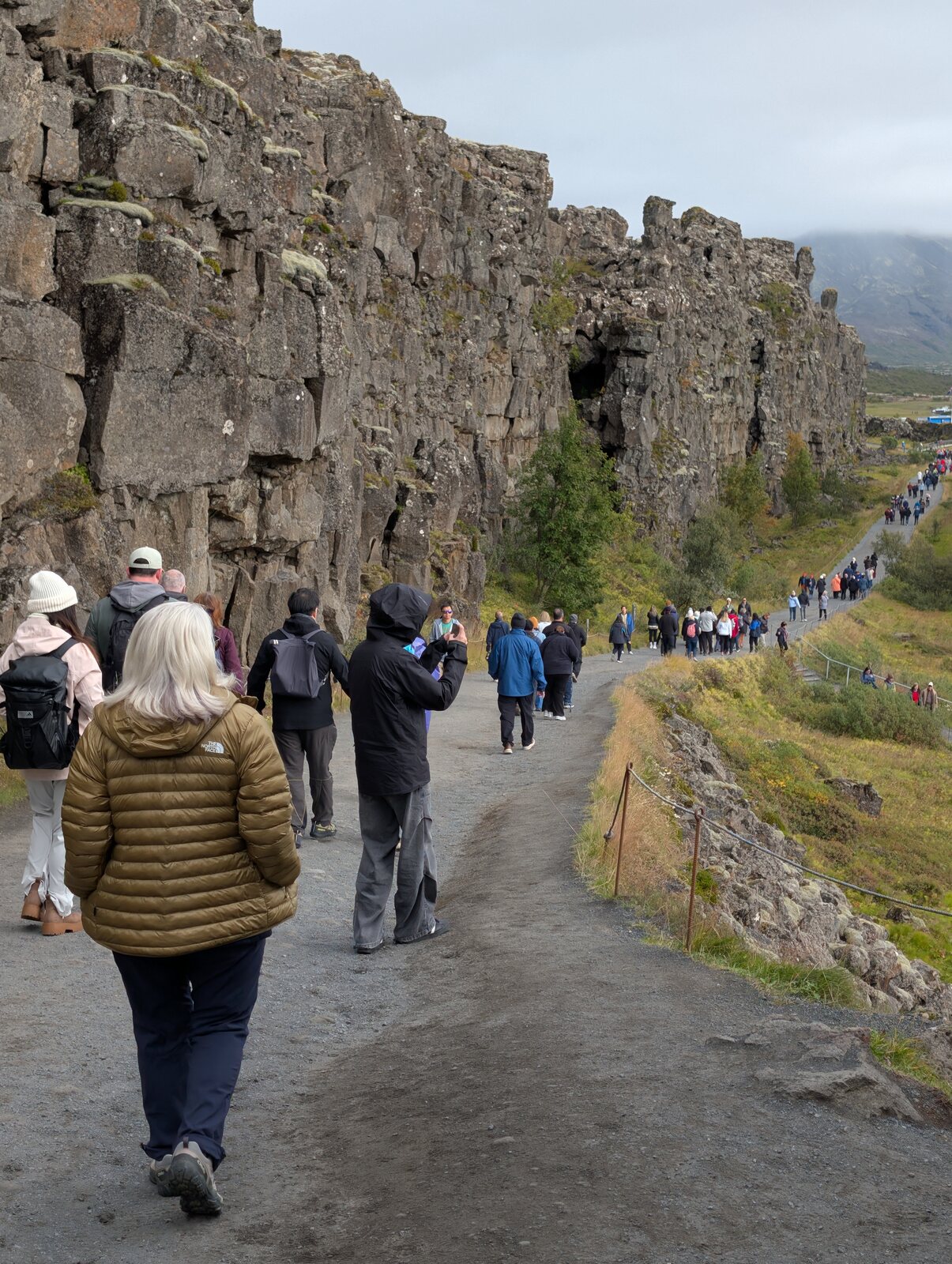
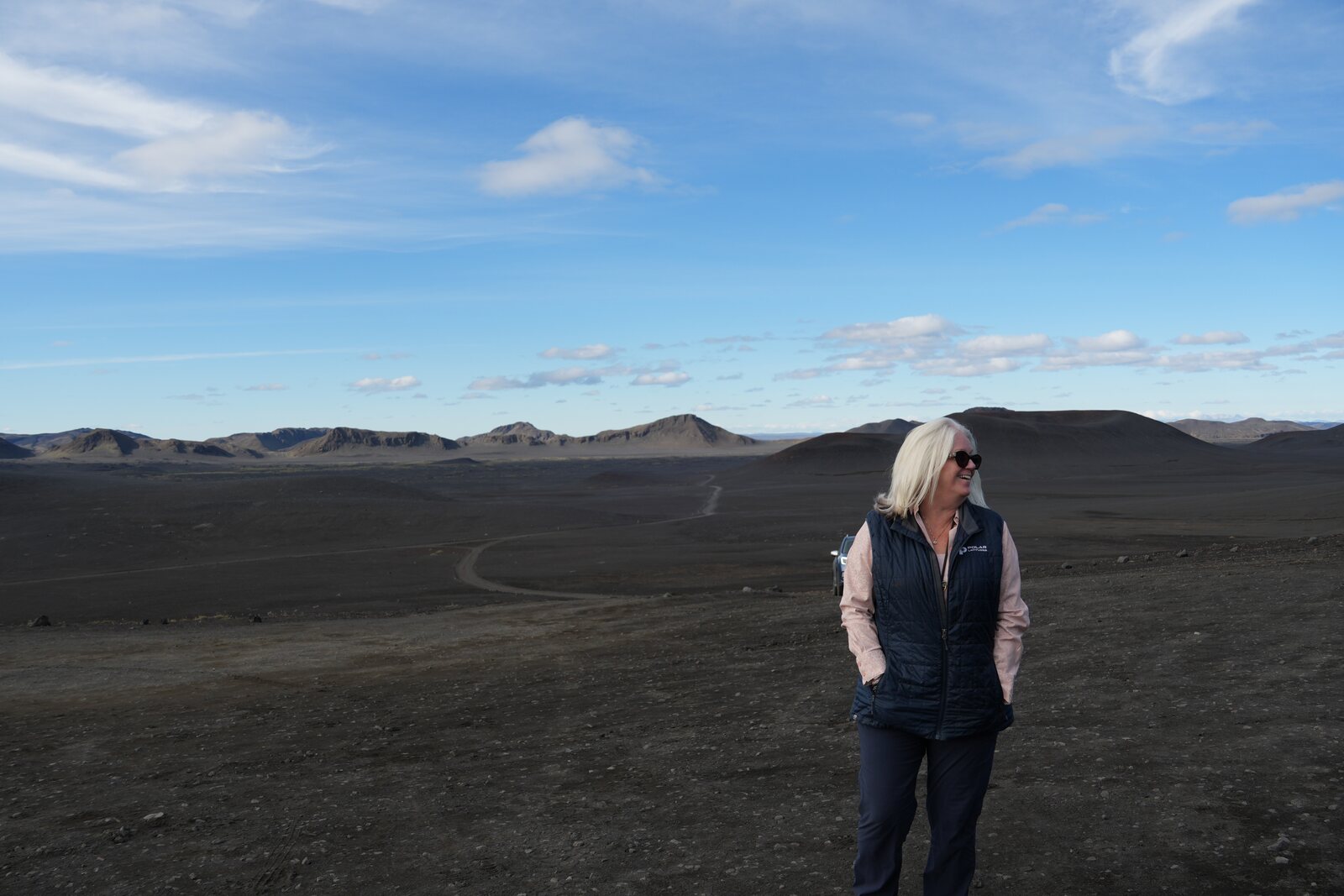
We did the Golden Circle: Þingvellir, Geysir, Strokkur and Gullfoss, followed by lunch among the tomatoes at Friðheimar and a soak at Laugarás Lagoon. Then into the Highlands through Þjórsárdalur, Gjáin and Landmannalaugar, with its almost implausible collection of colored mountains, black obsidian and volcanic terrain.
And waterfalls.
So many waterfalls.
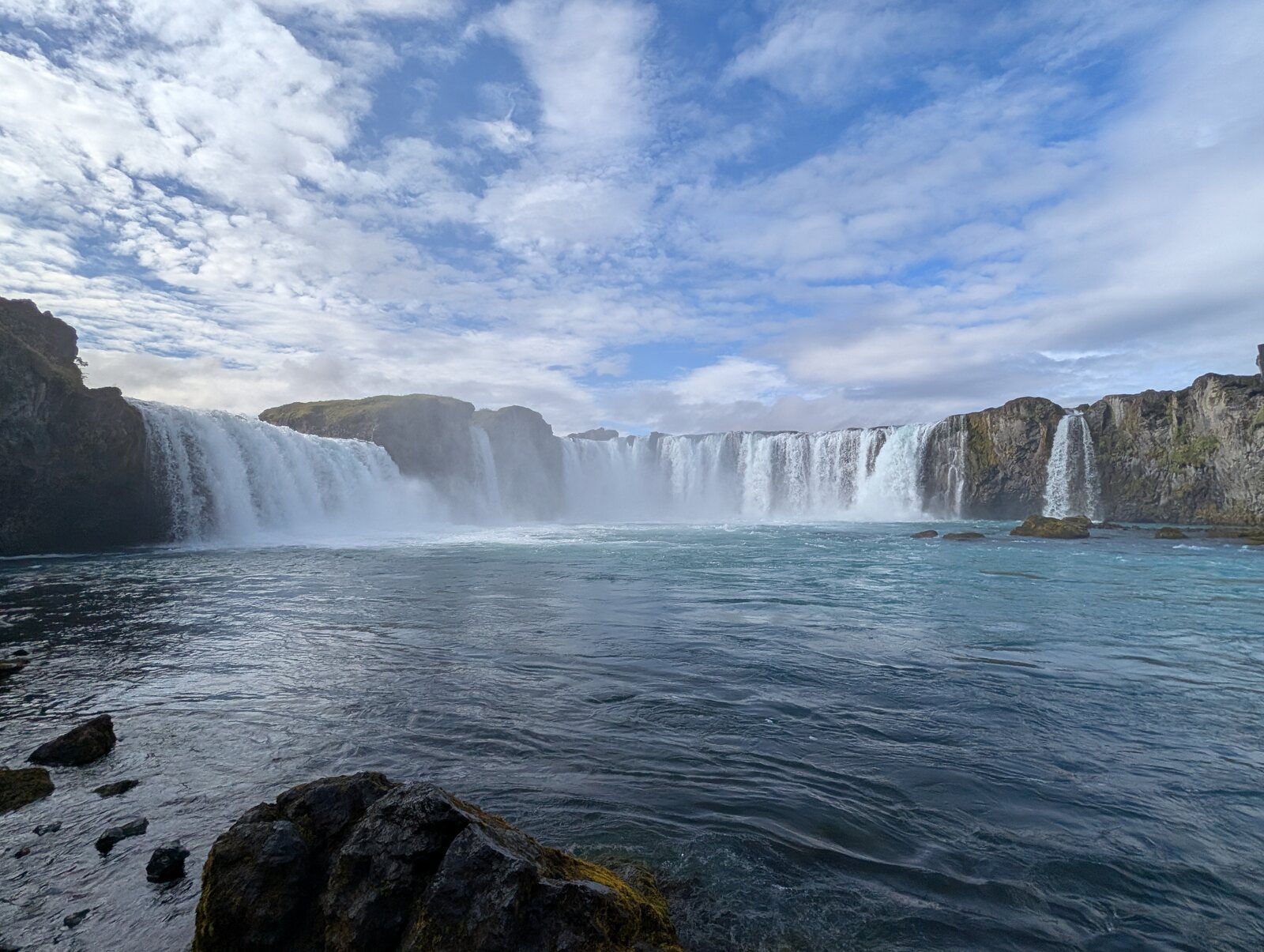
Urriðafoss. Hjálparfoss. Háifoss. Seljalandsfoss. Kvernufoss. Goðafoss. Dettifoss. And countless unnamed ones cascading down mountainsides as we drove past.
In Greenland, we'd traveled through what sometimes felt like a continuous parade of icebergs. In Iceland, it was waterfalls—or lava fields, canyons, geothermal vents, glaciers and landscapes that made us want to stop the car.
We probably tried to see too much.
By the second day of serious touring, I was already writing that the pace felt rushed. A few days later I wrote it again: We really need a few recovery days to get back to normal.
That's something we're learning about long-term travel. Just because we're capable of doing something every day doesn't mean we should.
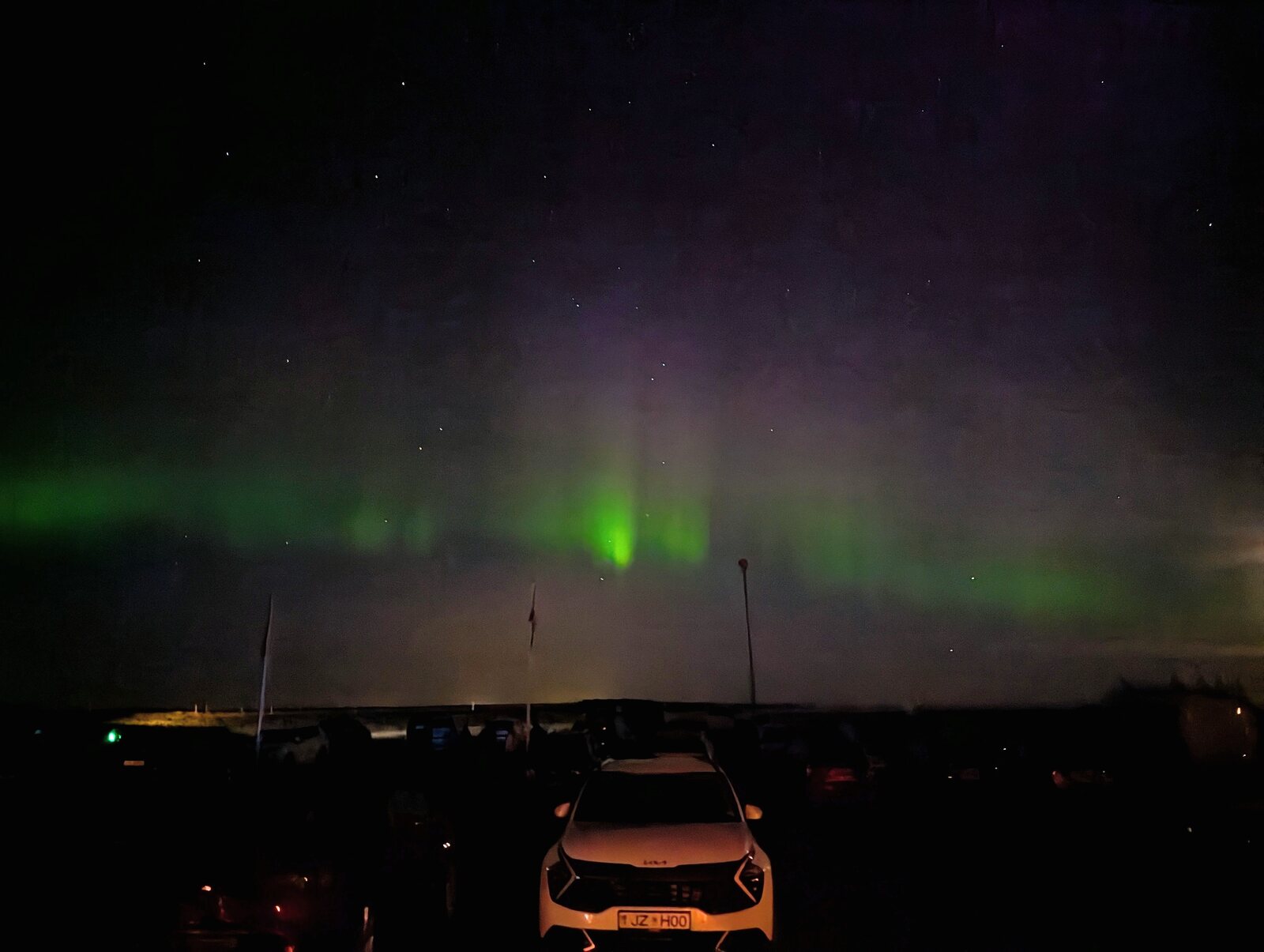
Iceland also gave us two very different nights beneath the northern lights.
At Hotel Rangá, we received an aurora wake-up call. Shirley took one look, decided they weren't particularly impressive, and went back to bed. They were faint to the naked eye, although my new camera saw considerably more than we could, and I came away with some surprisingly good photographs.
A few nights later at Hotel Kría, it was different.
This time the aurora was unmistakable—brighter, more active and much more impressive to the naked eye. Our guide told us it was among the better displays she'd seen.
Greenland had already given us an extraordinary night beneath the moon, shooting stars and aurora while we floated among icebergs. Iceland somehow managed to give us another version of the same magic.
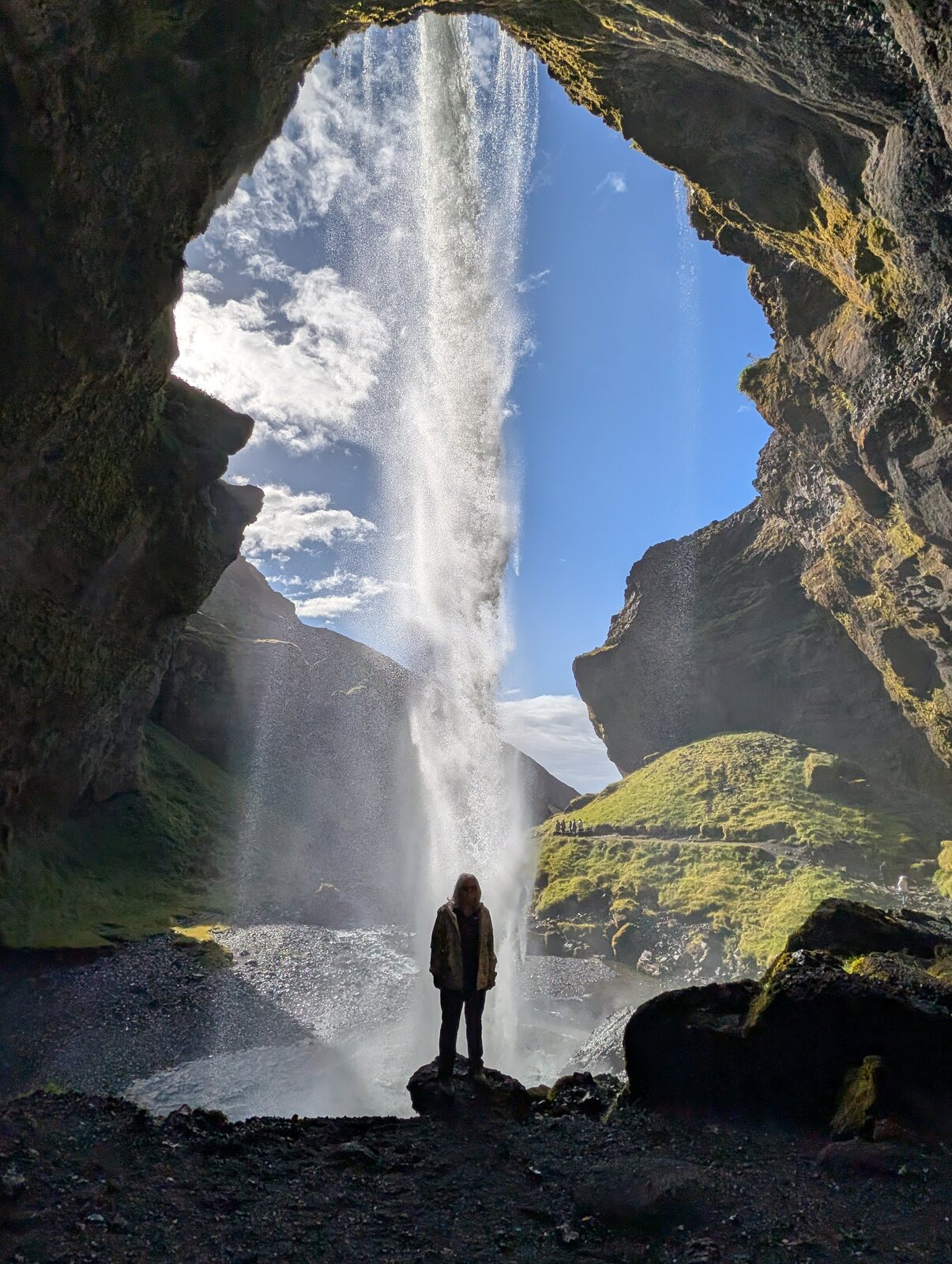
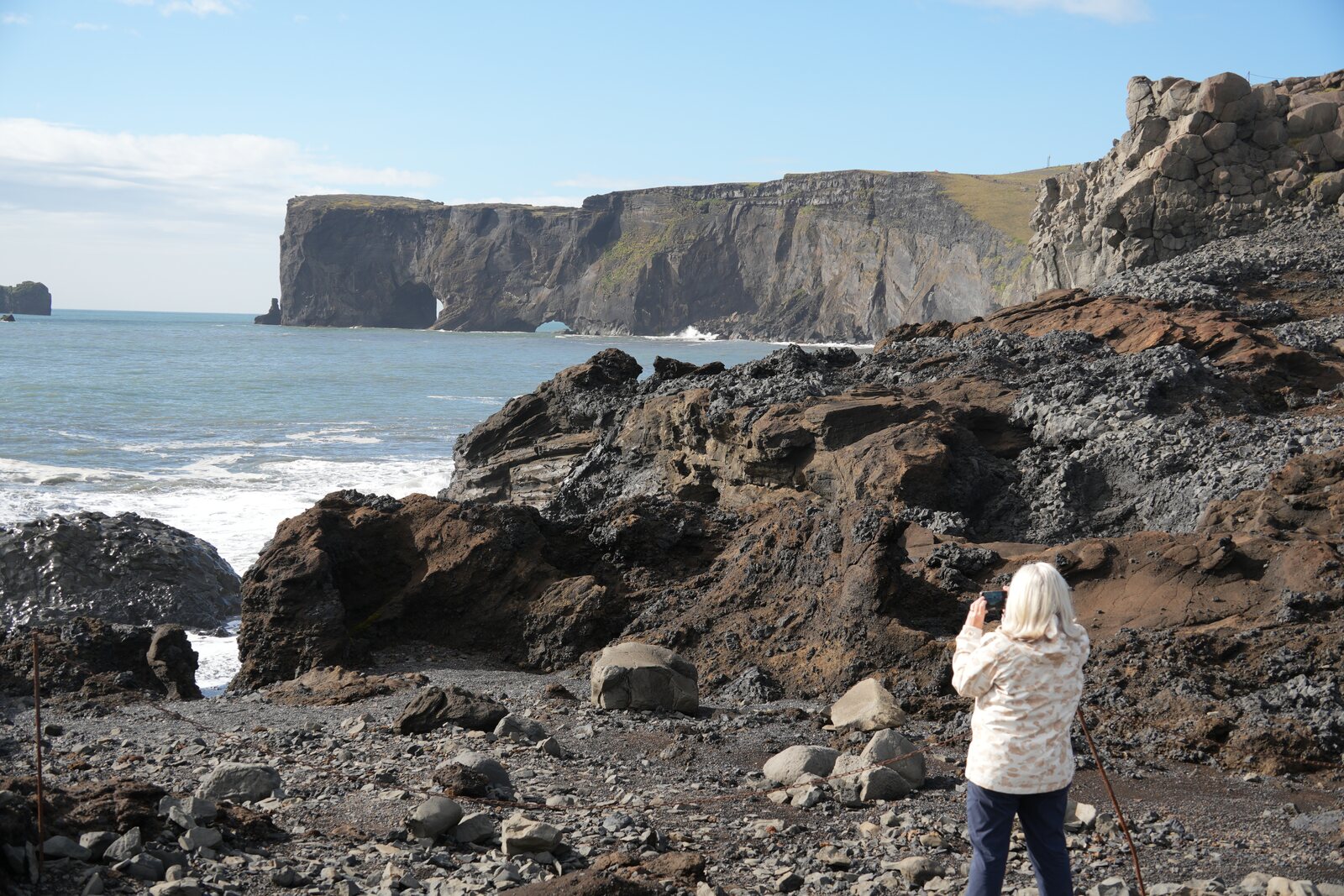
We visited Reynisfjara and Dyrhólaey, walked behind Kvernufoss, explored the south coast, and stopped at Fjaðrárgljúfur—the canyon apparently destined forever to be known as the Justin Bieber canyon.
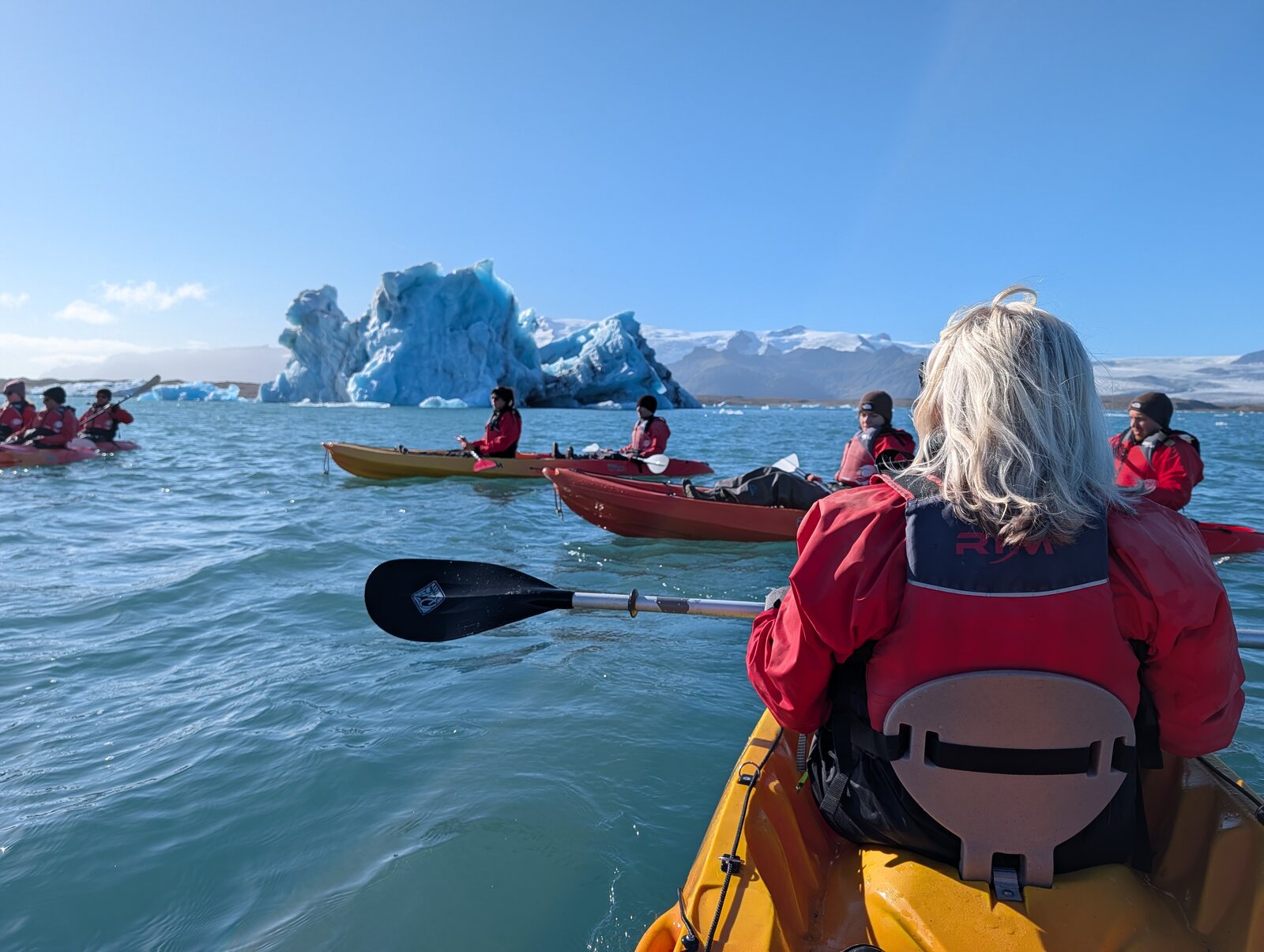
At Jökulsárlón we kayaked among icebergs in the glacier lagoon. The setting was spectacular. The group kayaking experience was not. We've apparently done enough group kayaking and snorkeling excursions now to establish a rule: if everyone is scrambling to keep up with everyone else, we'd rather paddle on our own.
Along the way, I bought a Sony camera.
That became its own little Iceland experiment. Greenland had been filled with serious photographers carrying enormous lenses, and I'd found myself thinking about all the photographs I hadn't been able to make—not only there, but of cheetahs in Africa and wildlife elsewhere. So in Reykjavík I bought a Sony a6700 and an 18–300mm lens and began learning how to use it as we traveled.
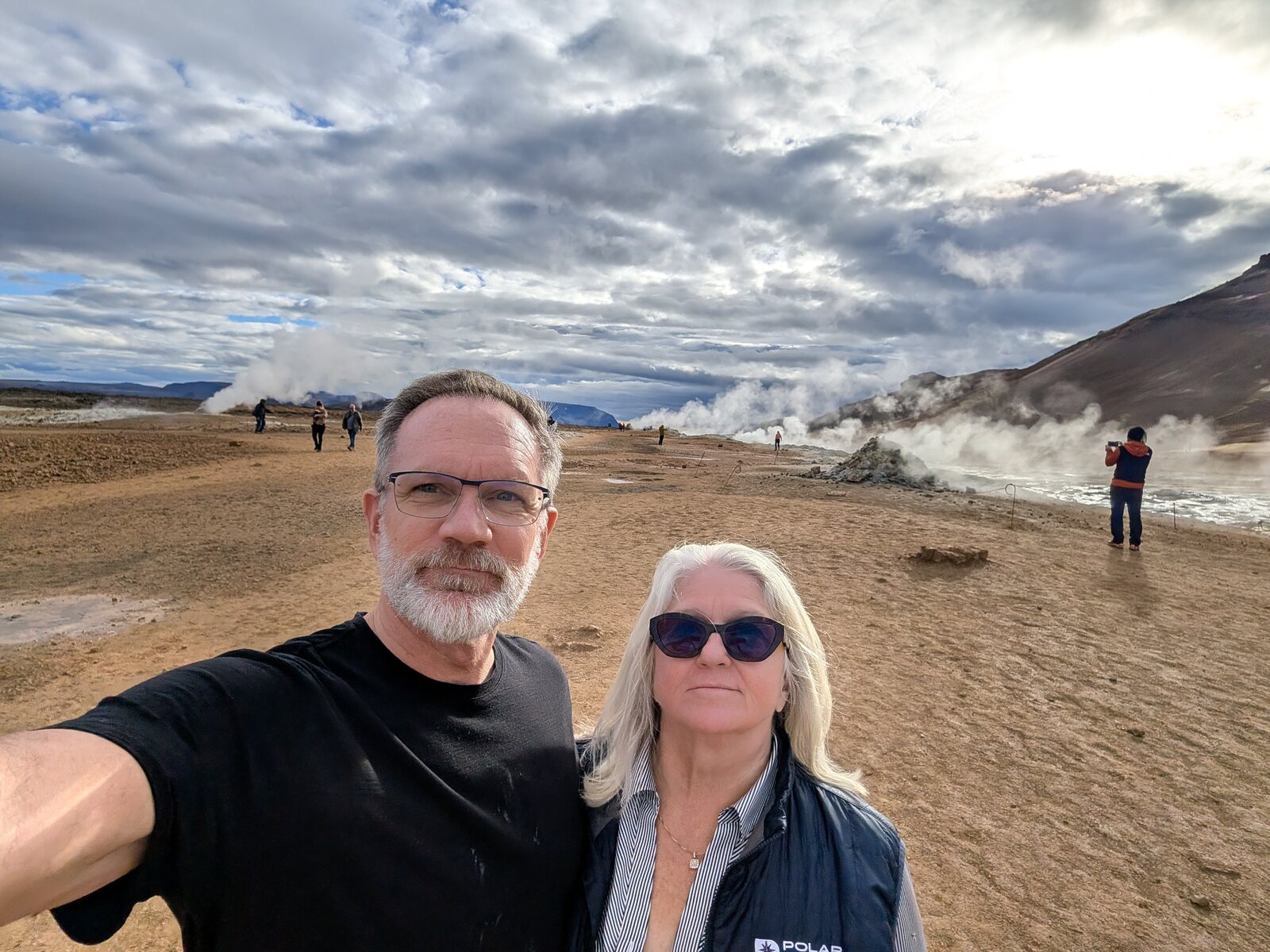
I don't want photography to become the trip. The Pixel is still better at capturing life as it happens. But the Sony is teaching me to look differently: a bird at 300mm, waves breaking on a beach, Shirley framed against a waterfall, people made tiny beneath enormous cliffs.
Maybe there's room for both.
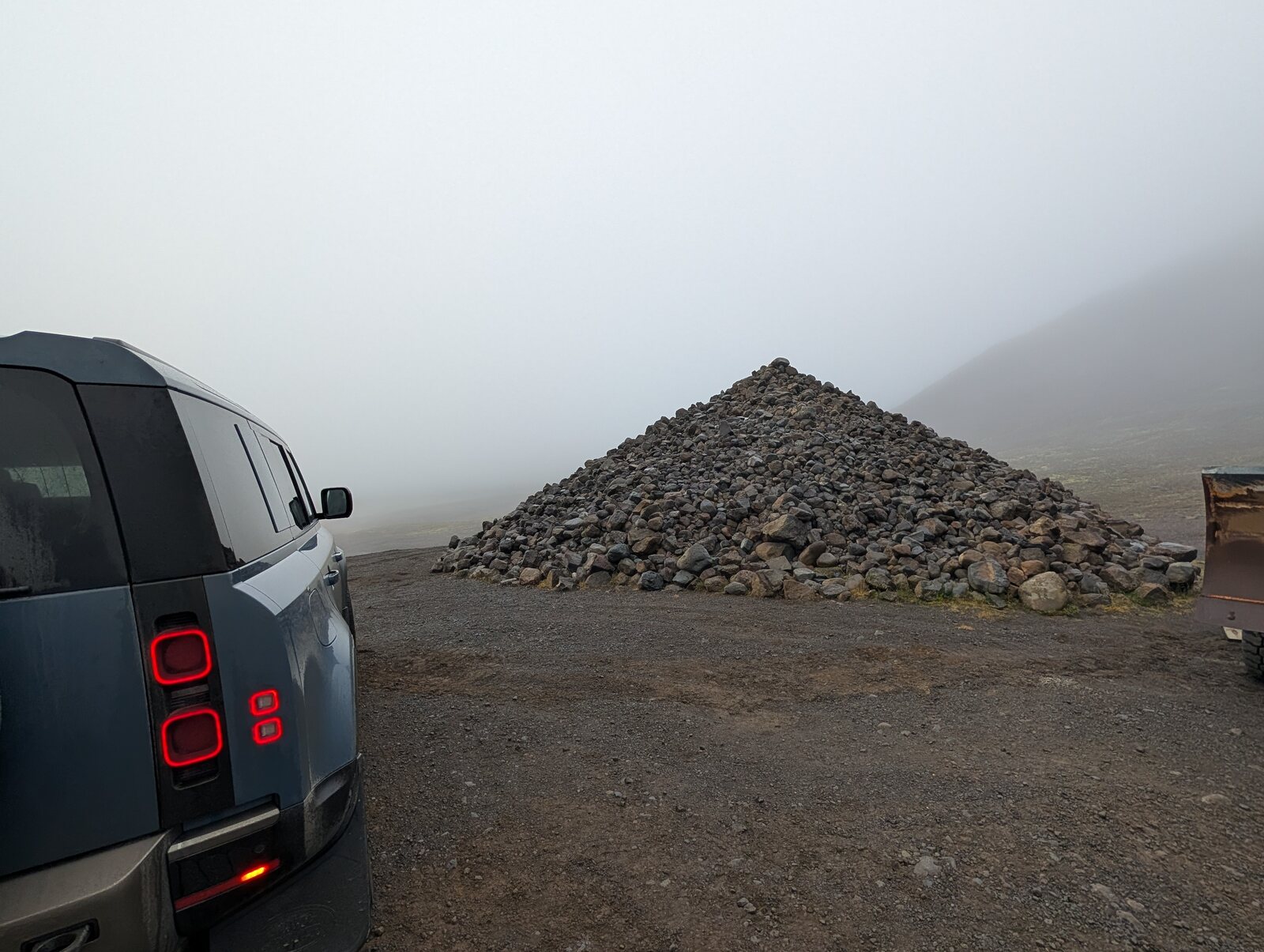
As we crossed the Highlands, our guide stopped at a cairn where travelers have been adding stones for good luck. We each picked up a stone and tossed it onto the pile before continuing on.
It was a tiny moment among all the spectacular scenery, but one worth remembering.
As we drove north, another realization was taking shape.
I had expected independent international travel to be harder.
Communicating, booking hotels, navigating unfamiliar places, driving—twenty years ago perhaps it was. But Portugal, the UK and now Iceland have shown us how accessible much of the world has become. Iceland in particular felt surprisingly easy. The roads were good, English was ubiquitous, and much of what we were seeing could easily have been visited without a full-time guide.
By Akureyri, I was already planning our return differently: rent a car, leave more empty days, hire guides selectively, and allow ourselves to stop whenever something catches our attention.
We also started questioning some of our assumptions about what makes travel enjoyable.
One night in Akureyri we ate at Akureyri Backpackers. After months of very good—and often very expensive—restaurants, Shirley ordered a chicken Caesar salad and I had a steak sandwich. Queen, INXS, Elton John, Spin Doctors, Chaka Khan and Guns N' Roses played in the background. Young people and old people were drinking, eating and having a good time.
The food hit the spot.
But what we really loved was the vibe.
It was another reminder that "nicer" doesn't necessarily mean better.
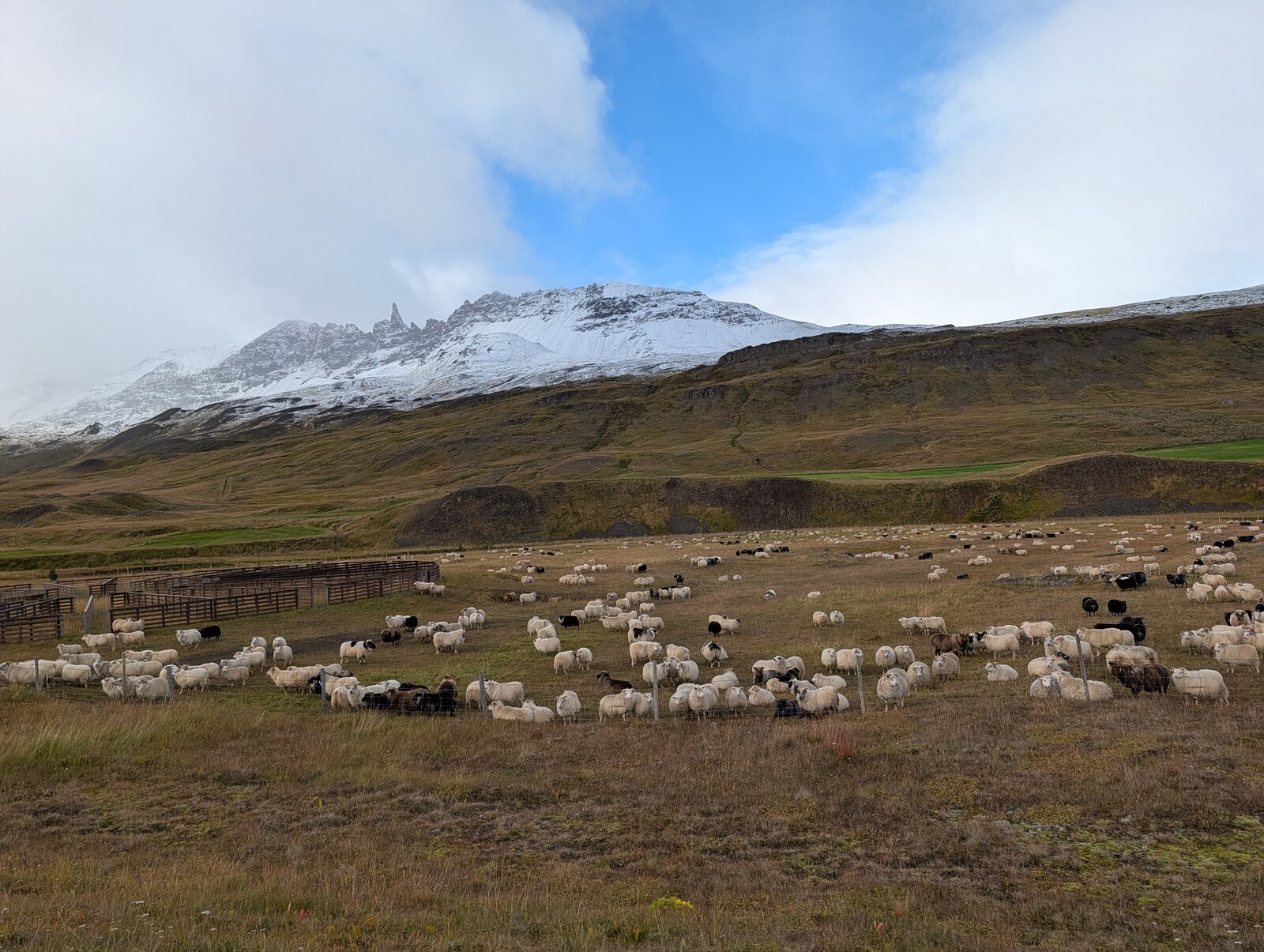
The next day Iceland gave us something we couldn't have scheduled. As we drove west, we came across the annual sheep roundup. Sheep that had wandered freely across the countryside all summer were being gathered into a rétt, hundreds of them waiting to be sorted and returned to their farms. Farther down the road, people were still bringing them down from the hills.
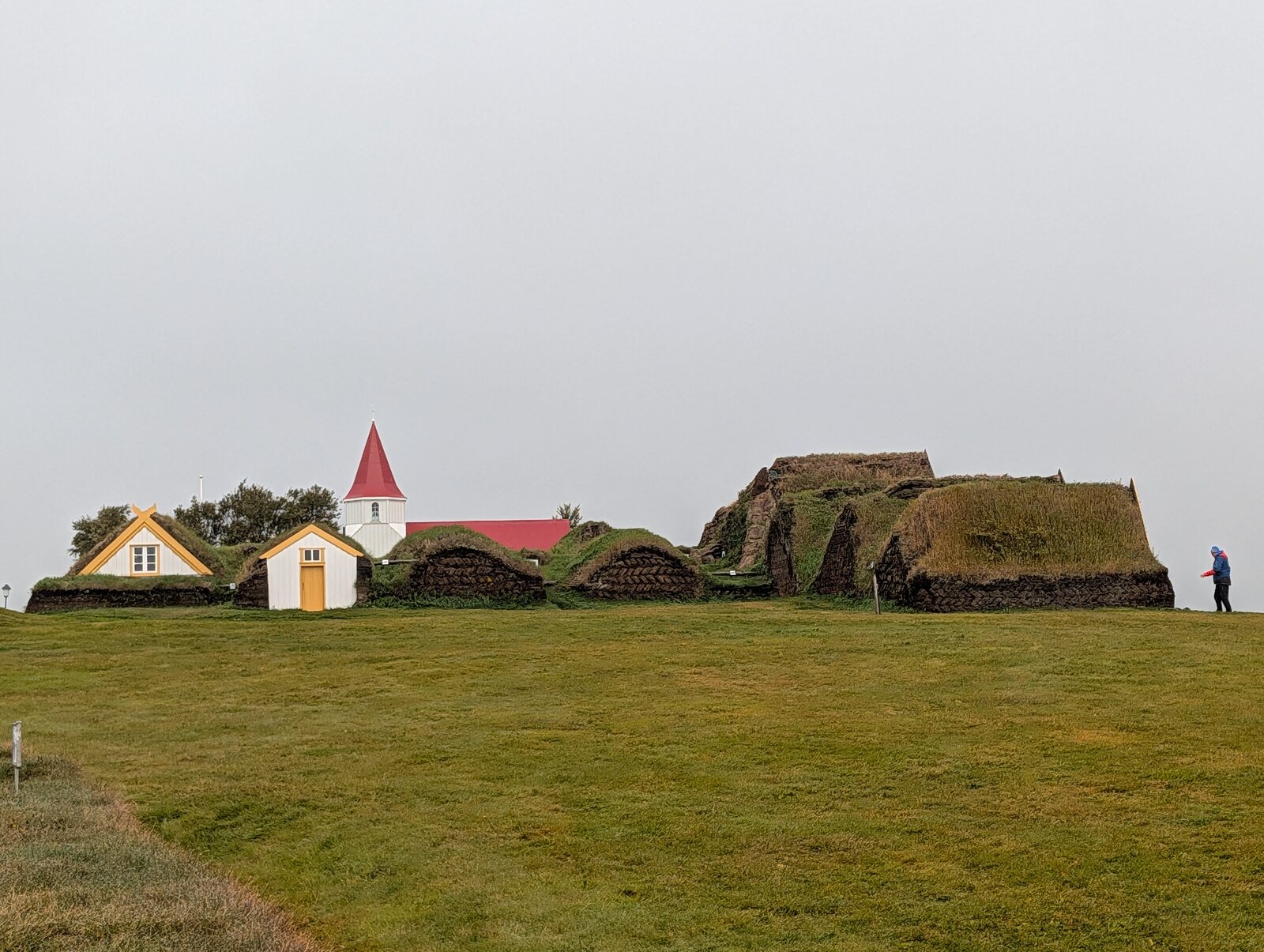
Snow had appeared on the mountains overnight. We visited Glaumbær Turf Farm, where houses that looked primitive from the outside turned out to be surprisingly comfortable inside.
Another reminder: maybe everything doesn't need to be the best.
Those long drives also became thinking time. Every morning our guide asked whether we'd like music.
I didn't.
I preferred taking notes and sitting with my thoughts.
There was suddenly a lot to think about: Laura and Rachel. What our travels might mean for the way we help them build their own lives. What money is for now. Whether we still want a home in Southern California. What "home" even means. How our worldview has changed over the past year.
I suspect our guide thought sitting silently in a van for hours was a little odd.
I came to value it.
That evening in Borgarnes, I ordered for us the fish of the day, a house red and a draft beer.
The waiter smiled.
"Fish and red?"
"Yes. My wife drinks red."
"Let me guess. You're from Switzerland?"
I laughed.
Earlier in the trip, an Icelandic cashier had spoken to me in Icelandic. Before we started traveling, I'd worried that we'd walk around Europe looking unmistakably like American tourists.
Apparently not.
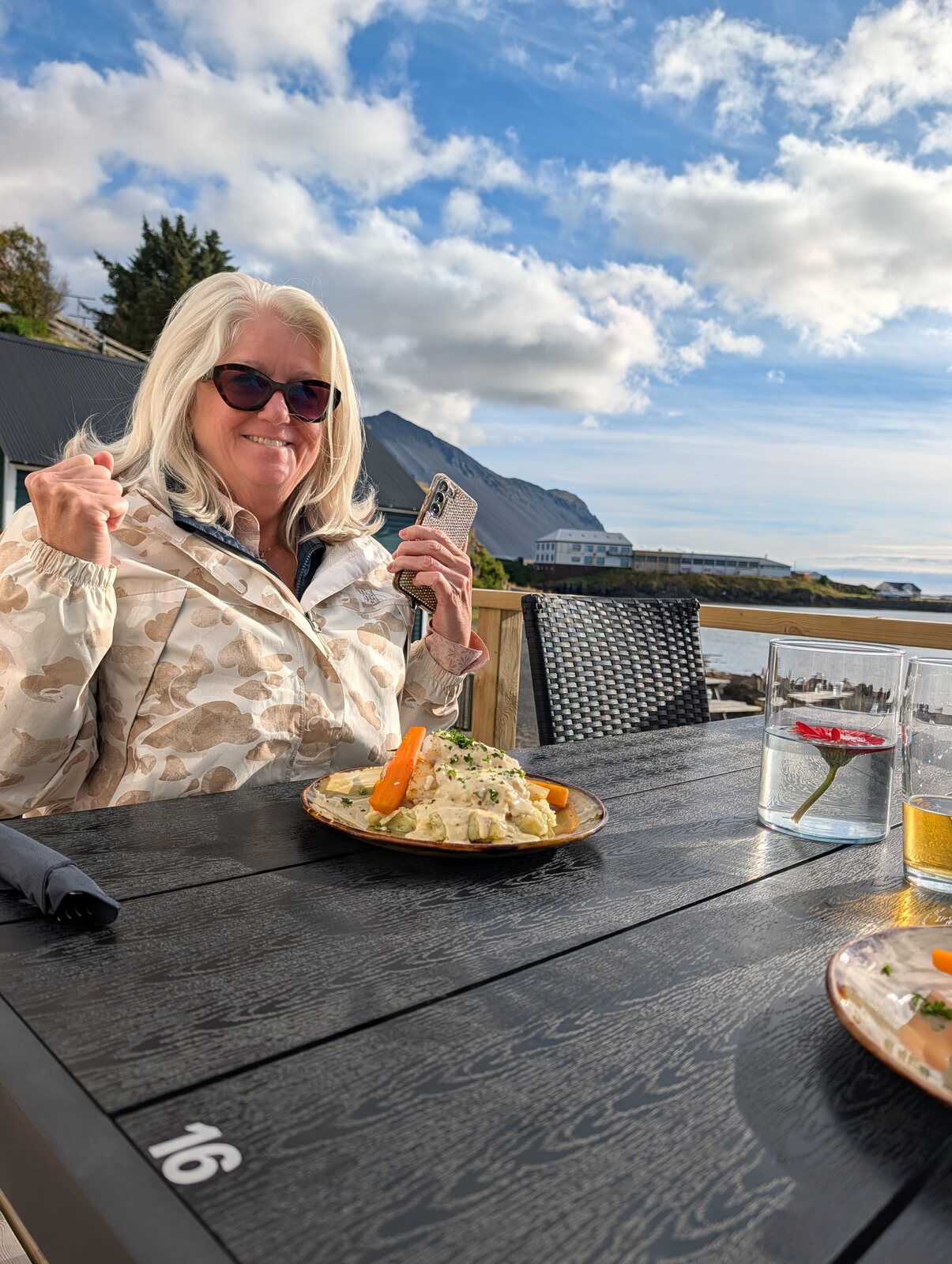
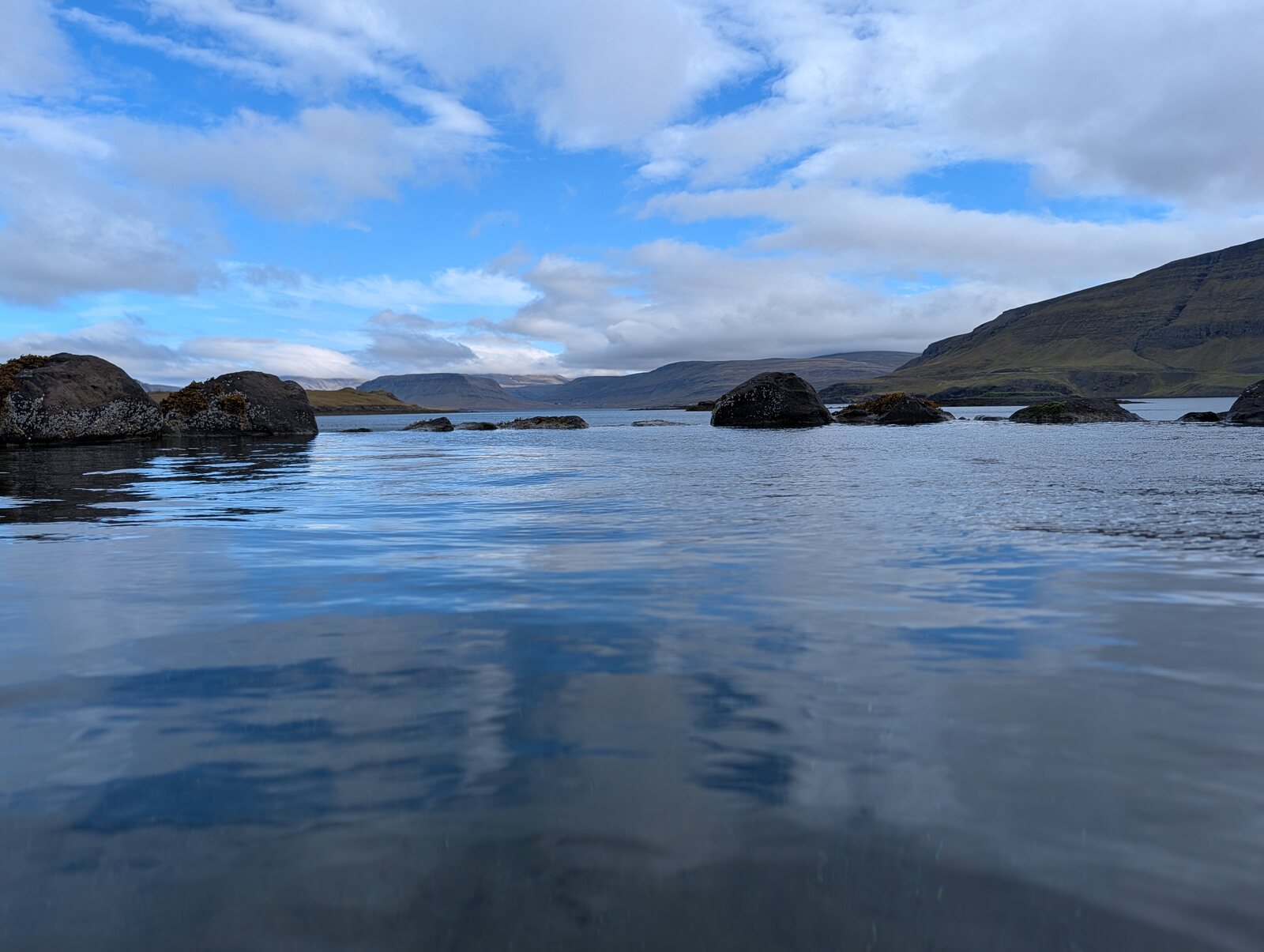
Dinner was outside overlooking the fjord. The sun was shining. The water was almost perfectly still.
"Water's calm, wind's calm, Shirley's calm," Shirley said.
"The trifecta."
A sundog appeared in the sky. We'd already seen a rainbow earlier that day. I joked that all we needed now was a humpback whale to breach in front of us.
Sitting on the patio, watching another man sitting in a chair outside his home doing essentially the same thing I was doing, the grin returned.
This place is niiice.
After everything we'd seen in Iceland, when our driver asked us on our final morning to name our favorite thing, that's where my mind went.
Not a glacier. Not an aurora. Not a waterfall.
Dinner on a patio in Borgarnes.
We spent our final few nights outside Reykjavík at Hvammsvík. By then we'd finally learned our lesson and took an entire day off.
No waterfall. No glacier. No sightseeing checklist.
We ate a leisurely breakfast in our room, walked down to the geothermal baths, and spent nearly three hours moving between hot water, cold plunge, steam room and sauna. Shirley ordered seafood soup at the bistro and surprised me by happily eating the mussels.
Walking back afterward, sheep watched us suspiciously from beside the path.
The air was cold and crisp. The sun was out. The wind, temperature and smell of the place were impossible to capture in a photograph. "Unspoiled" was the closest word I could find.
Iceland was teaching us something we probably should have known already.
We don't need to be going somewhere or doing something for a day to feel worthwhile.
Some of our best moments came when we simply stopped—sitting on a patio overlooking the fjord in Borgarnes, spending an afternoon in the hot springs at Hvammsvík, or having nowhere in particular we needed to be.
We came to Iceland wanting to see it.
Somewhere along the way, we realized we also needed time just to be in it.
The following day Iceland gave us one final gift. We took a helicopter flight in weather our pilot said happens perhaps twice a year.
By then I felt a little like Johnny Cash.
I've been everywhere, man.
We returned to Reykjavík, took a food tour, ate still more lamb, cod and plokkfiskur, and spent our final full day walking the city after our whale-watching trip was cancelled. We visited Hallgrímskirkja again and finished with dinner at ROK: lamb, cod, plokkfiskur and salad.
Then we packed.
Shirley still doesn't like packing.
The next morning we headed to Keflavík, made it through without any drama, stopped at the Icelandair Lounge for a quick breakfast, and boarded our flight back to California.
When we first arrived in Iceland, it was somewhere we were passing through on the way to Greenland.
When we left, I was disappointed to go.
That's probably the most important thing Iceland gave us.
We no longer feel compelled to "finish" places. Portugal taught us that first. Iceland reinforced it. There are places worth seeing once, and there are places that somehow fit the life we want to live—places where we'd like to return without needing a new reason.
Next time we would do less. Drive ourselves. Stay longer. Hike more. Leave room for weather and whim. Visit the north and east. Maybe the Westfjords. Return to favorite places rather than constantly collecting new ones.
And leave time to sit still.
Downtime isn't simply recovery from the trip. It's part of the trip.
Sometimes the reason to leave a day empty isn't so we'll have enough energy for tomorrow's excursion. It's so that, for a few hours, we can actually inhabit the place we've traveled so far to reach.
We started this year with a long list of places we wanted to see.
Increasingly, we're discovering places we want to know.