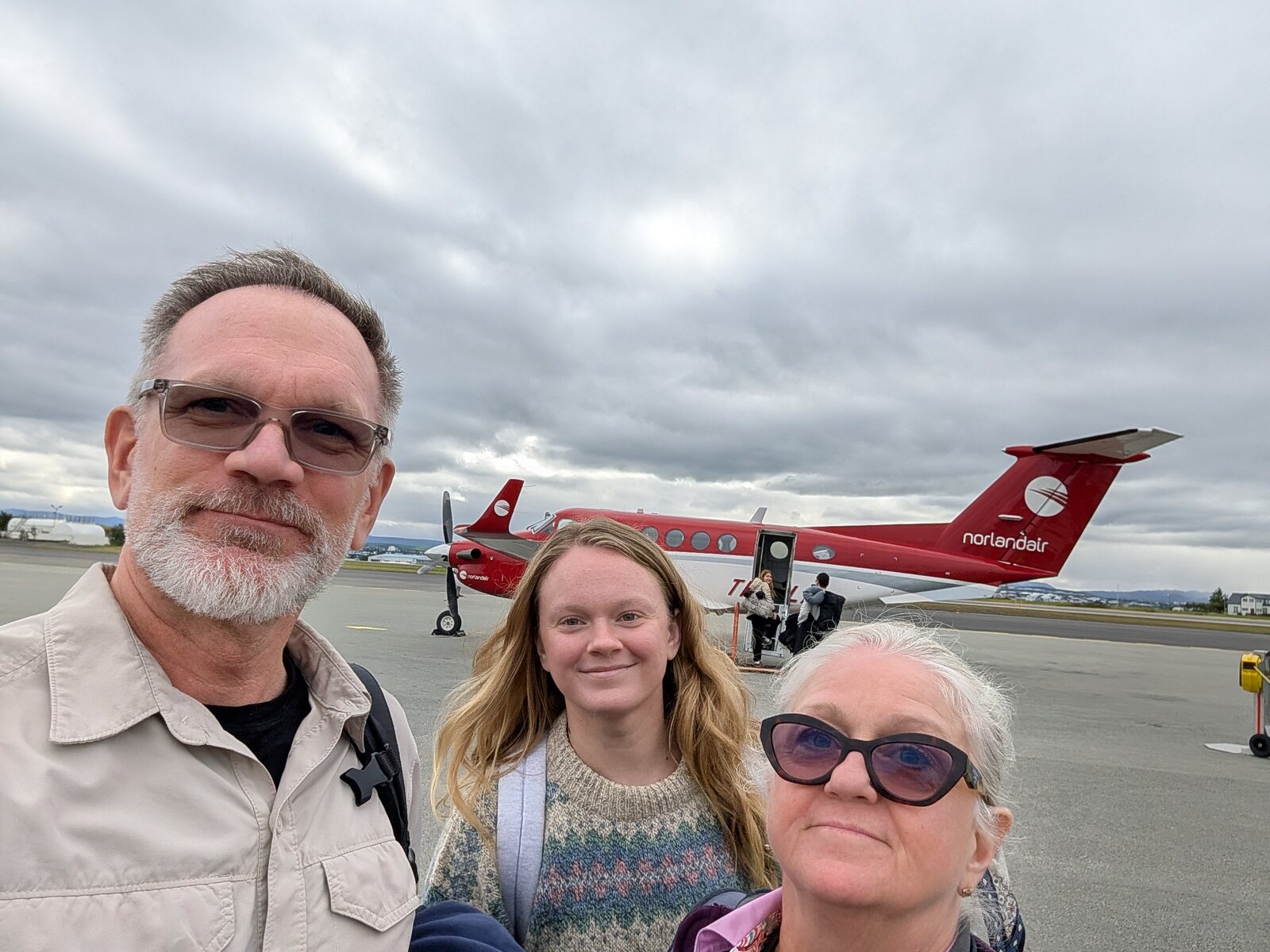
We left Reykjavík on August 26 aboard a small King Air bound for Constable Point in East Greenland.
There were seven of us on the plane.
Low clouds covered Iceland as we took off. We climbed through them and emerged into sunshine.
VFR on top.
Niiice.
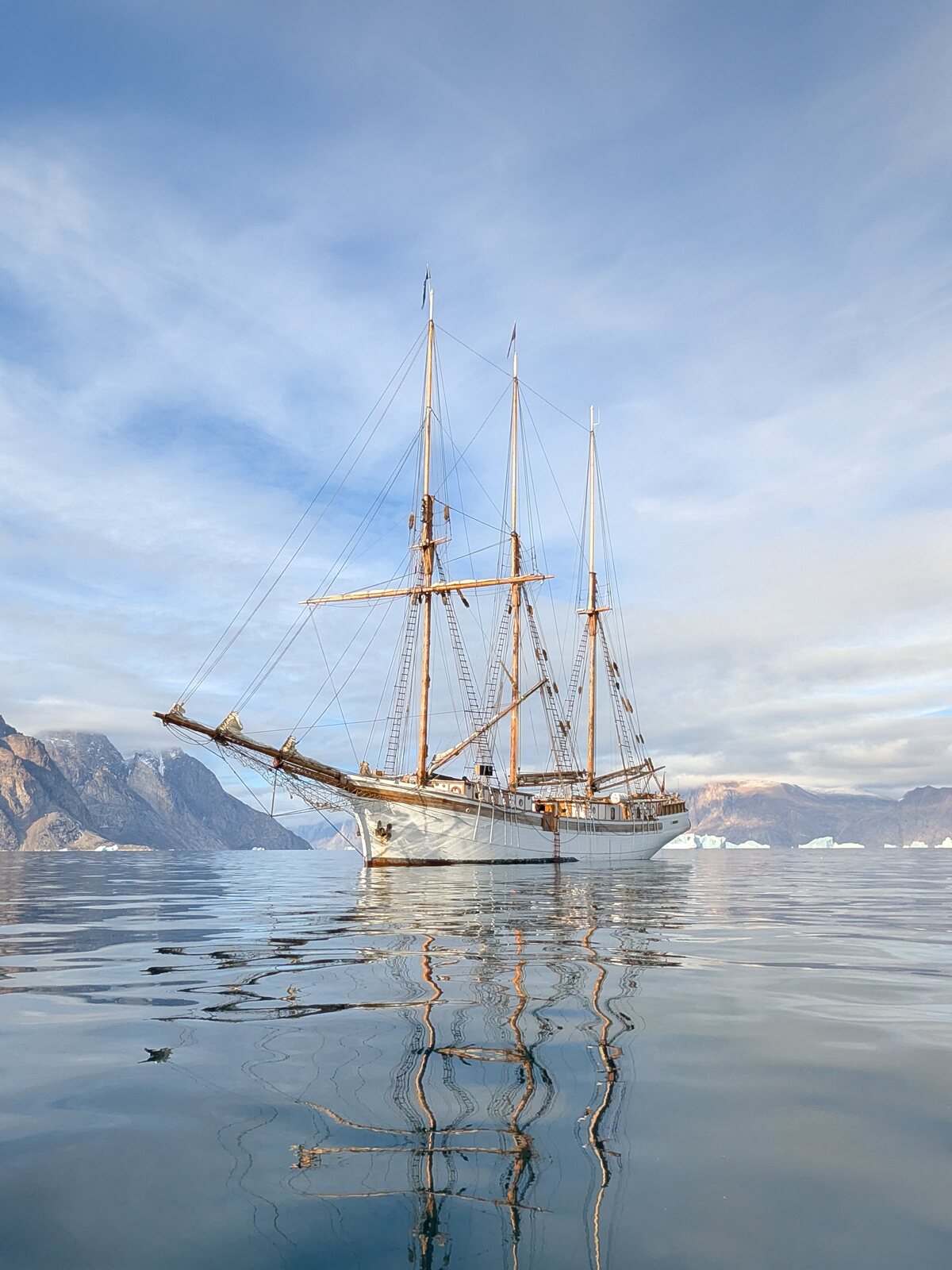
At Constable Point, we walked from the airport to the water, climbed into a Zodiac and made our way to Linden.
Then we had a safety briefing.
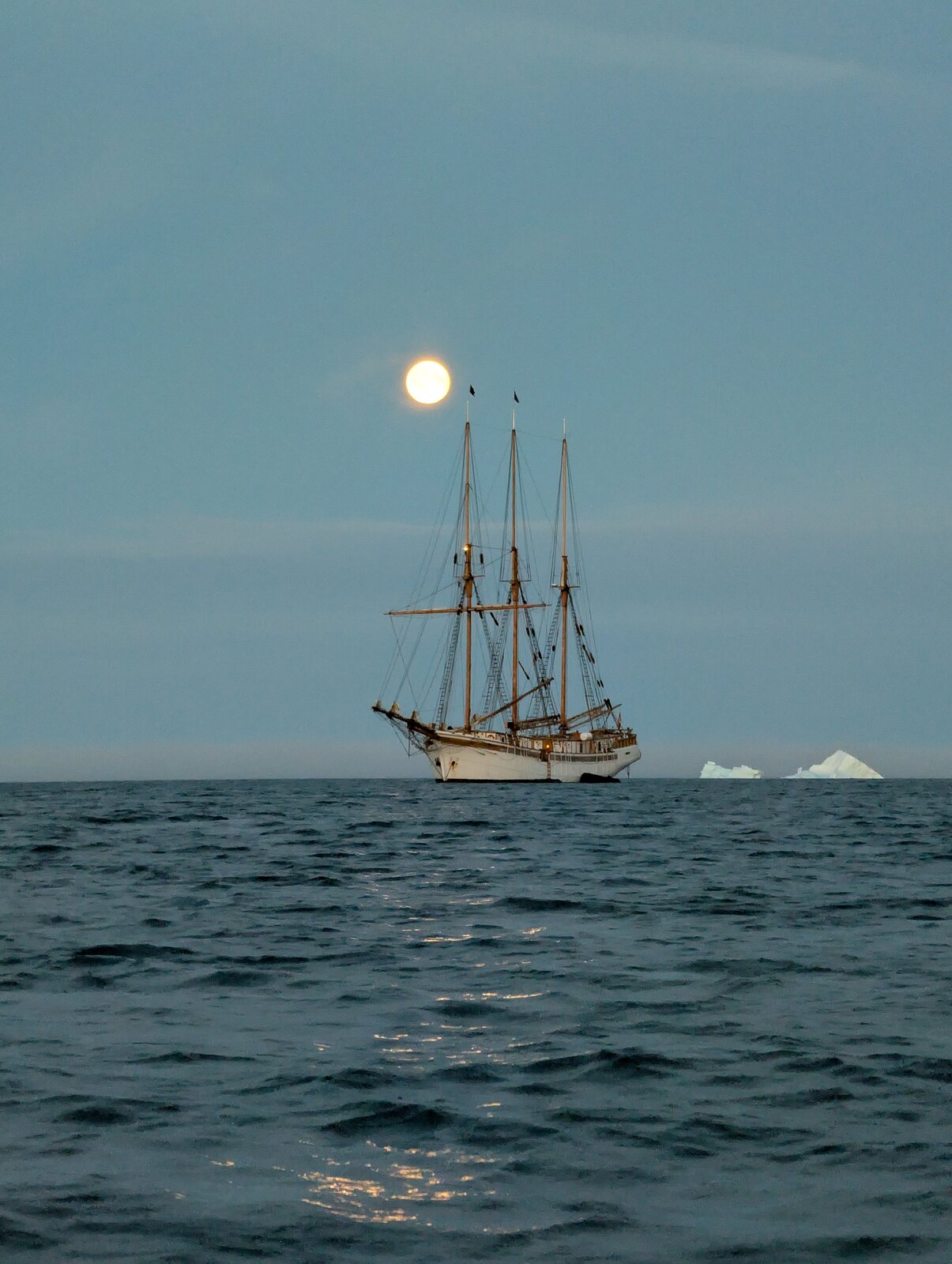
And suddenly we were aboard a sailing ship in East Greenland.
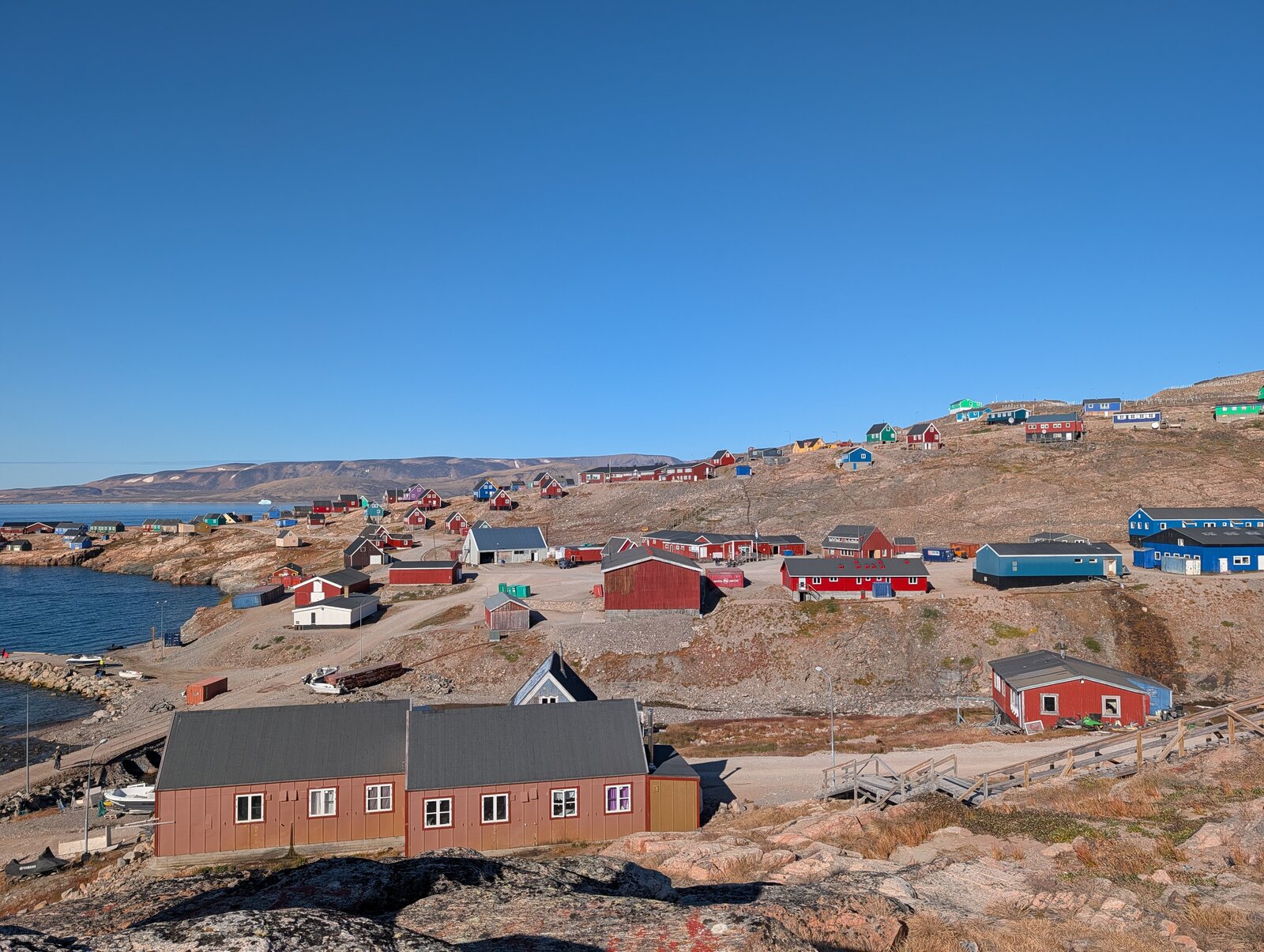
Ittoqqortoormiit
Our first morning, I woke around five, got dressed and went topside.
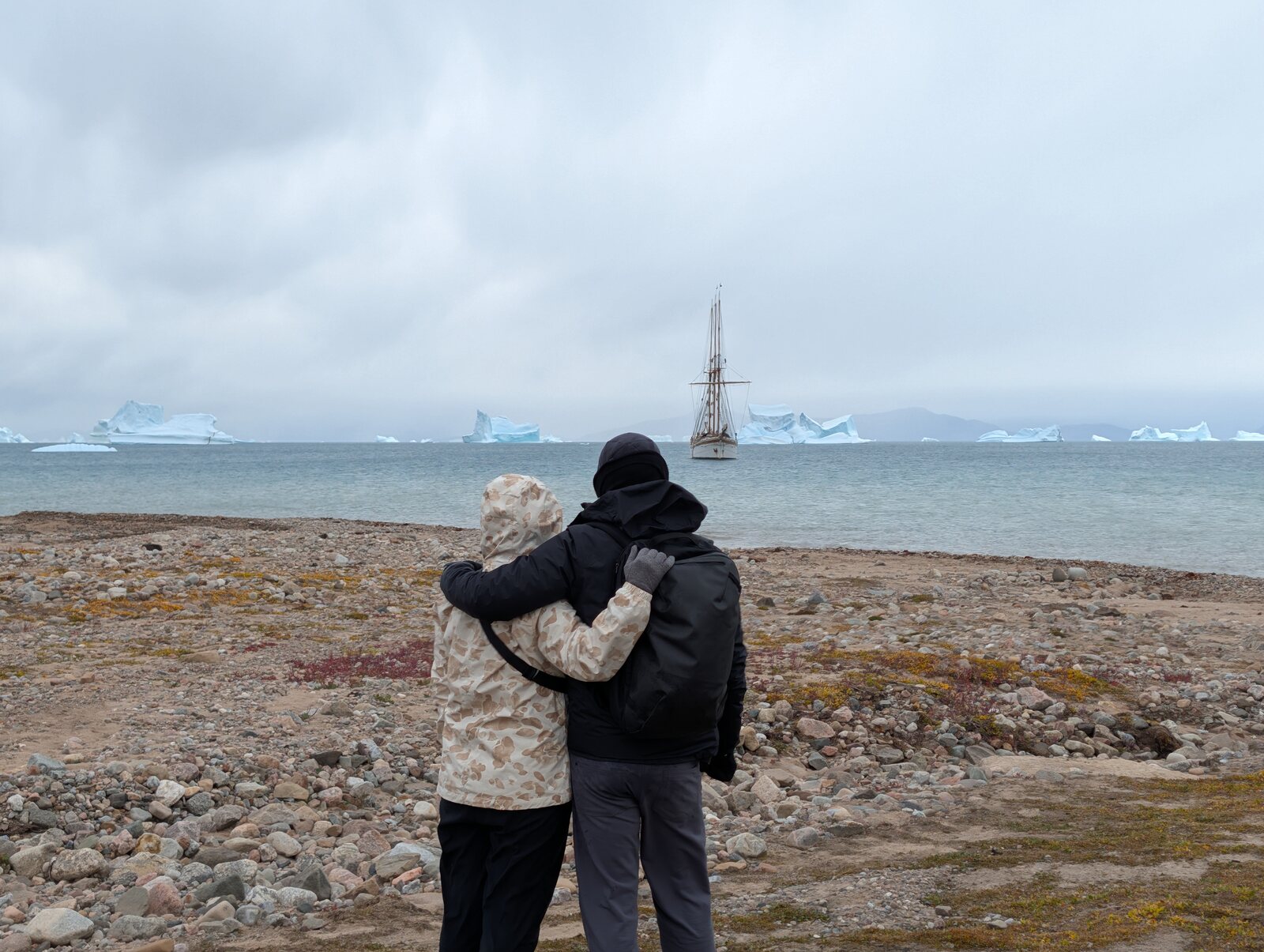
We were anchored near Ittoqqortoormiit.
The morning was beautiful.
Later, we went ashore and walked through town.
Ittoqqortoormiit is one of the most remote settlements in Greenland. There are no roads connecting it with other towns. Reaching it generally requires a plane, helicopter or ship.
And there we were.
A small town.
Mountains.
Water.
Icebergs.
And almost nothing connecting it to the rest of the world.
The Vegetables Didn’t Make It
As we were leaving Ittoqqortoormiit, a Zodiac came racing toward Linden.
We joked that it was ICE coming to check our paperwork.
It wasn’t.
It was bringing bags of musk ox meat.
Our expedition leader had already explained—repeatedly—that “the vegetables” hadn’t reached the airport in time to make it onto the ship.
Someone was then supposed to helicopter them into Ittoqqortoormiit.
They never arrived.
We still ate some vegetables, along with fish, eggs and plenty of good, filling food.
But the meals aboard Linden were very different from the food we had grown accustomed to during the previous several weeks.
We ate musk ox ribs.
Musk ox stew.
Venison that had been shot by the ship’s captain sometime in the past.
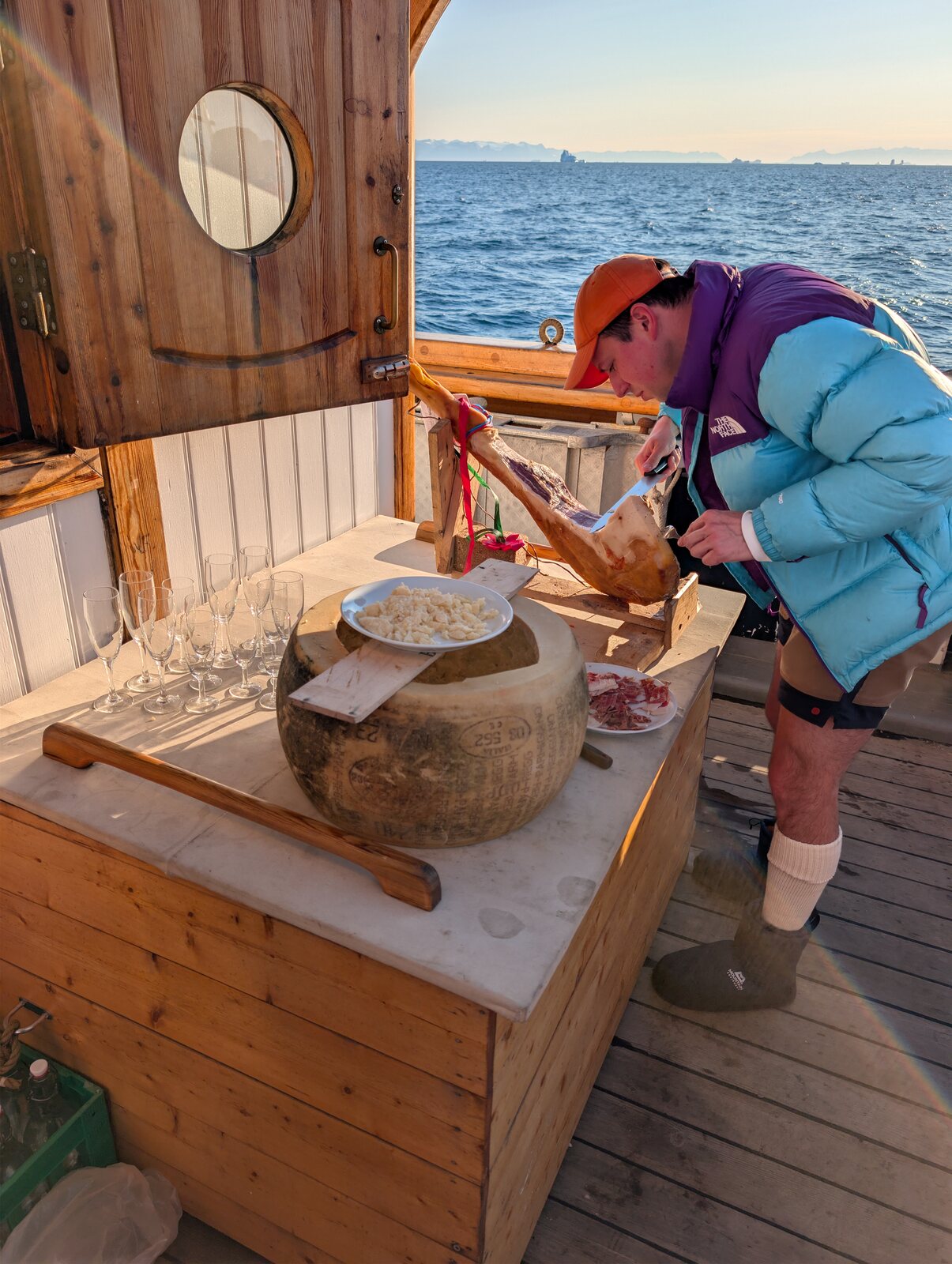
Then, mixed in with the musk ox and venison, our expedition leader produced a leg of jamón, a wheel of Parmesan cheese and many bottles of Champagne.
It was an eclectic pantry.
The vegetables might not have made it.
But apparently the Champagne had.
The First Polar Bear
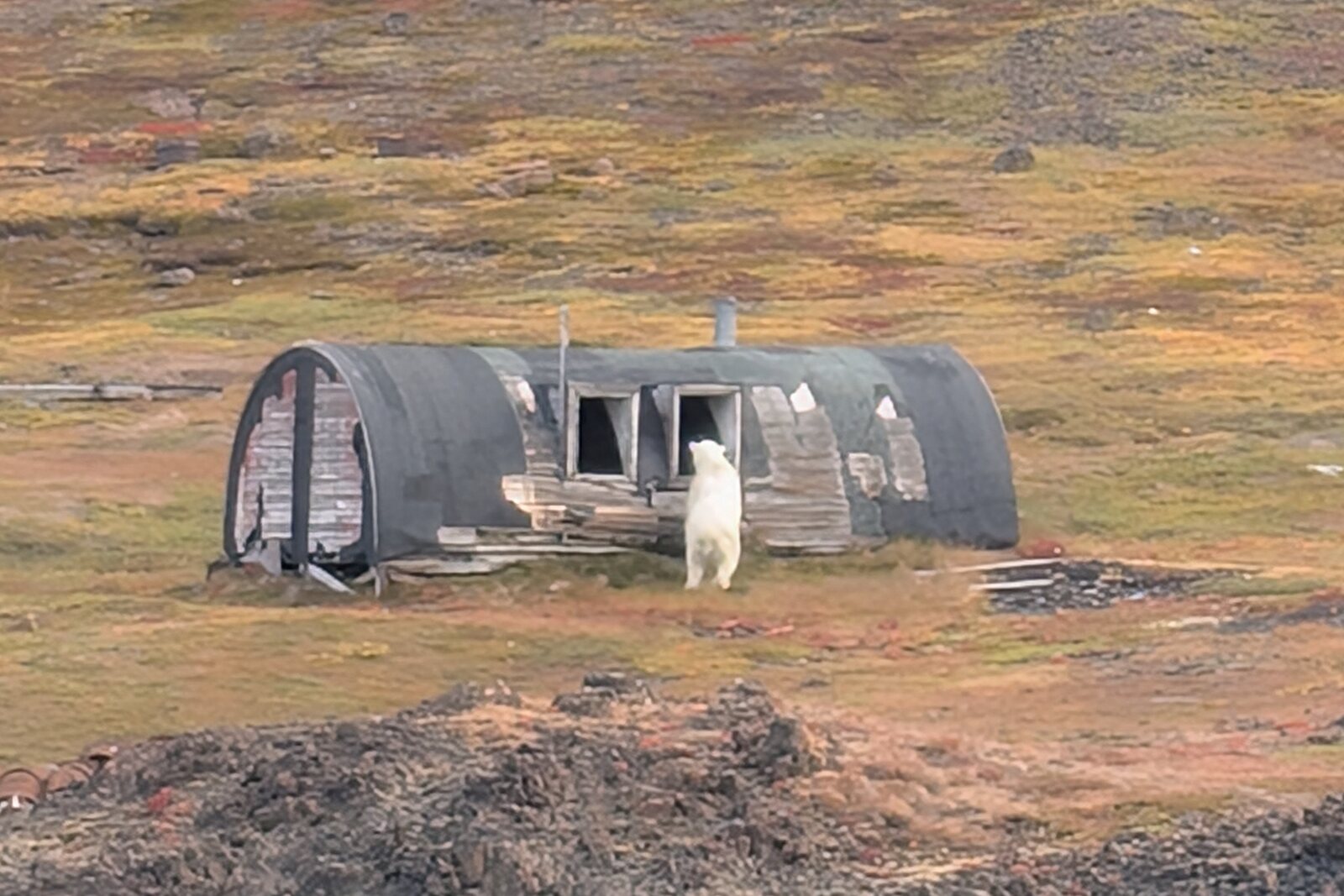
The following morning, someone spotted a polar bear swimming.
We watched it come out of the water and investigate an abandoned settlement.
Seeing a polar bear was one of the things everyone hoped might happen on the trip.
And now it had.
Lucky.
Later, Linden moved to another bay where the crew had located a whale carcass.
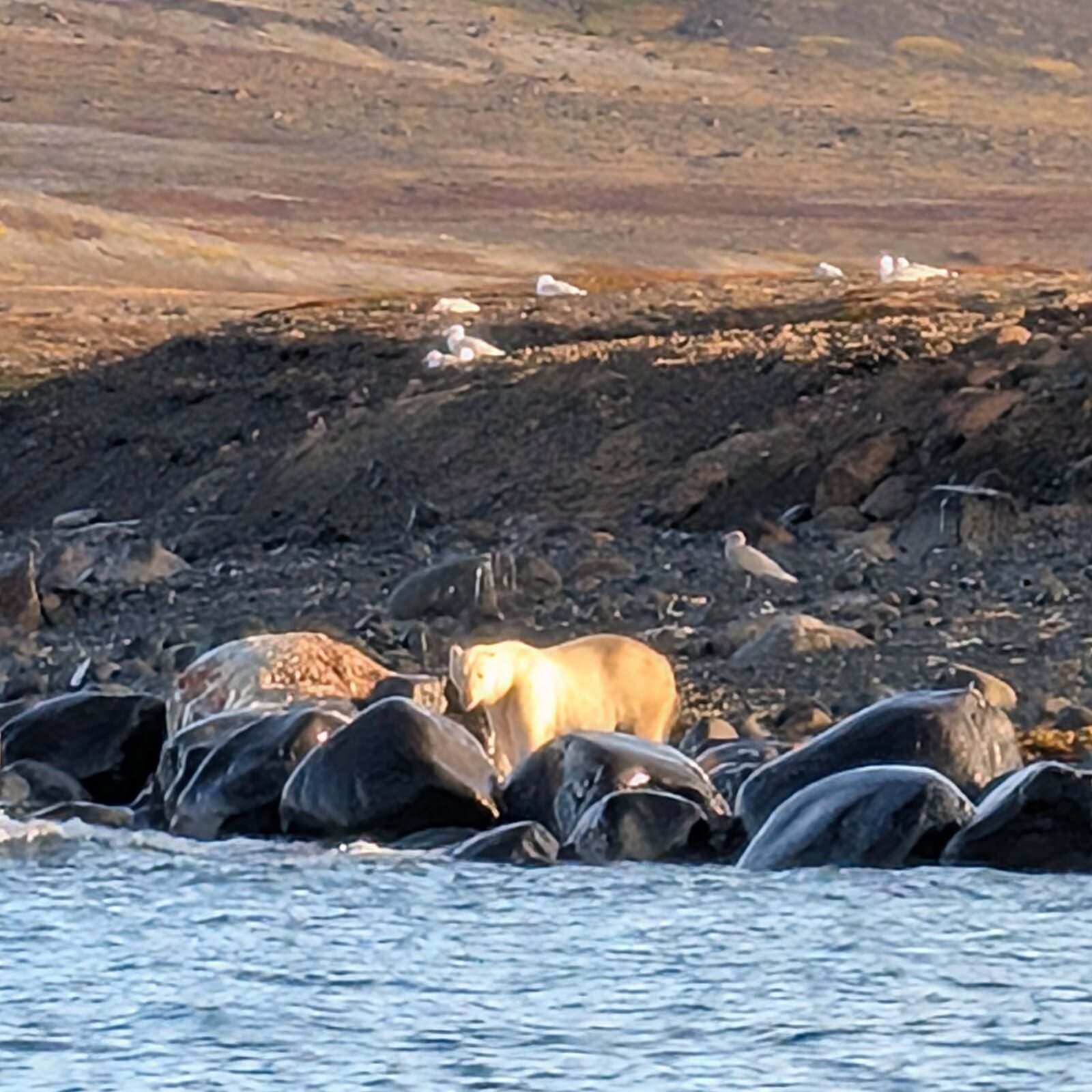
We saw a polar bear along the shore.
Then another.
One appeared to chase the other.
People aboard another sailboat told us there had been a cub there the previous day. The cub was now dead. The best guess was that a male bear had killed it.
At one point, one of the bears began swimming away from shore.
We watched, unable to tell where it was going.
The distance didn’t seem to concern it.
That night someone spotted another bear near the whale carcass.
We put on our gear, climbed into the Zodiac and headed into the fjord.
By the time we arrived, the bear had moved on.
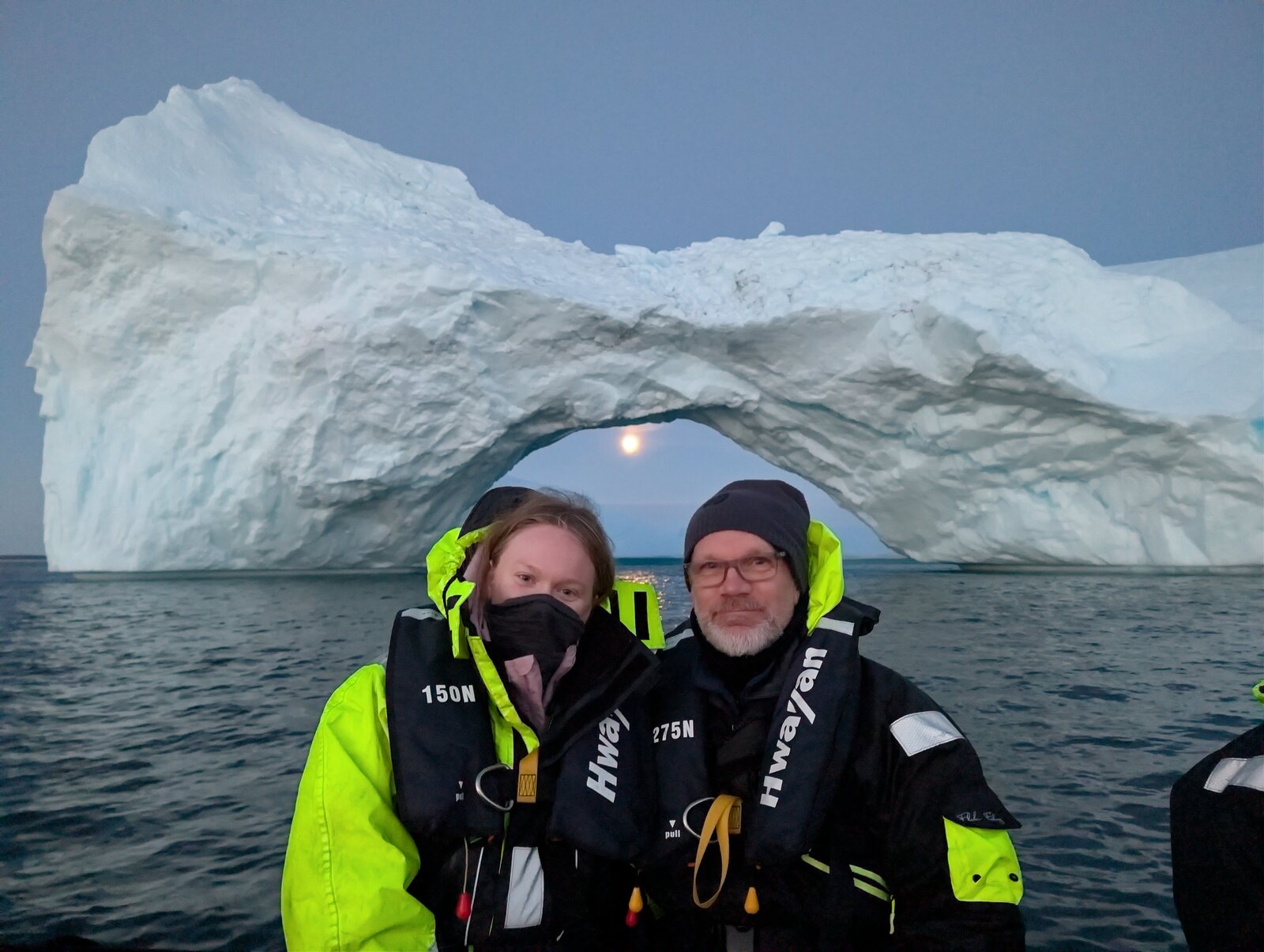
But there was a spectacular iceberg rising from the dark water beside us.
It had a large arch carved through it, and from the Zodiac the moon appeared almost perfectly framed inside the opening.
Laura and I had our photograph taken with it behind us.
Then we saw a couple of shooting stars.
Then the northern lights appeared.
They were faint.
But they were there.
Nothing in the photograph quite captures where we were—out at night in a Zodiac, in a fjord in East Greenland, beside an enormous iceberg, far from almost everything.
The moon framed by the ice.
Shooting stars overhead.
The aurora beginning to appear.
We had gone out looking for a polar bear.
Instead, we found ourselves in the middle of one of the most incredible experiences of the trip.
A reasonable consolation prize.
Bears at Breakfast
The next morning, Joe woke us at 6:40.
There were bears on the carcass.
If we wanted to go, we needed to get dressed quickly and get into the Zodiac.
I went.
We watched a bear feeding and moved around to get photographs.
Later, two bears appeared together at the carcass and then played in the water.
Two members of the crew eventually went ashore to take samples from the dead cub.
From Linden, we could see the crew members, the cub, the whale carcass and two polar bears.
Then someone looked toward the hillside.
There was another bear much farther up.
From where we stood, it looked about the size of a grain of rice.
It was an extraordinary morning.
It was also a reminder that Greenland wasn’t arranging itself for us.
The bears were beautiful.
The cub was dead.
The whale had become food.
Nothing about the scene was sentimental.
Climbing the Mast
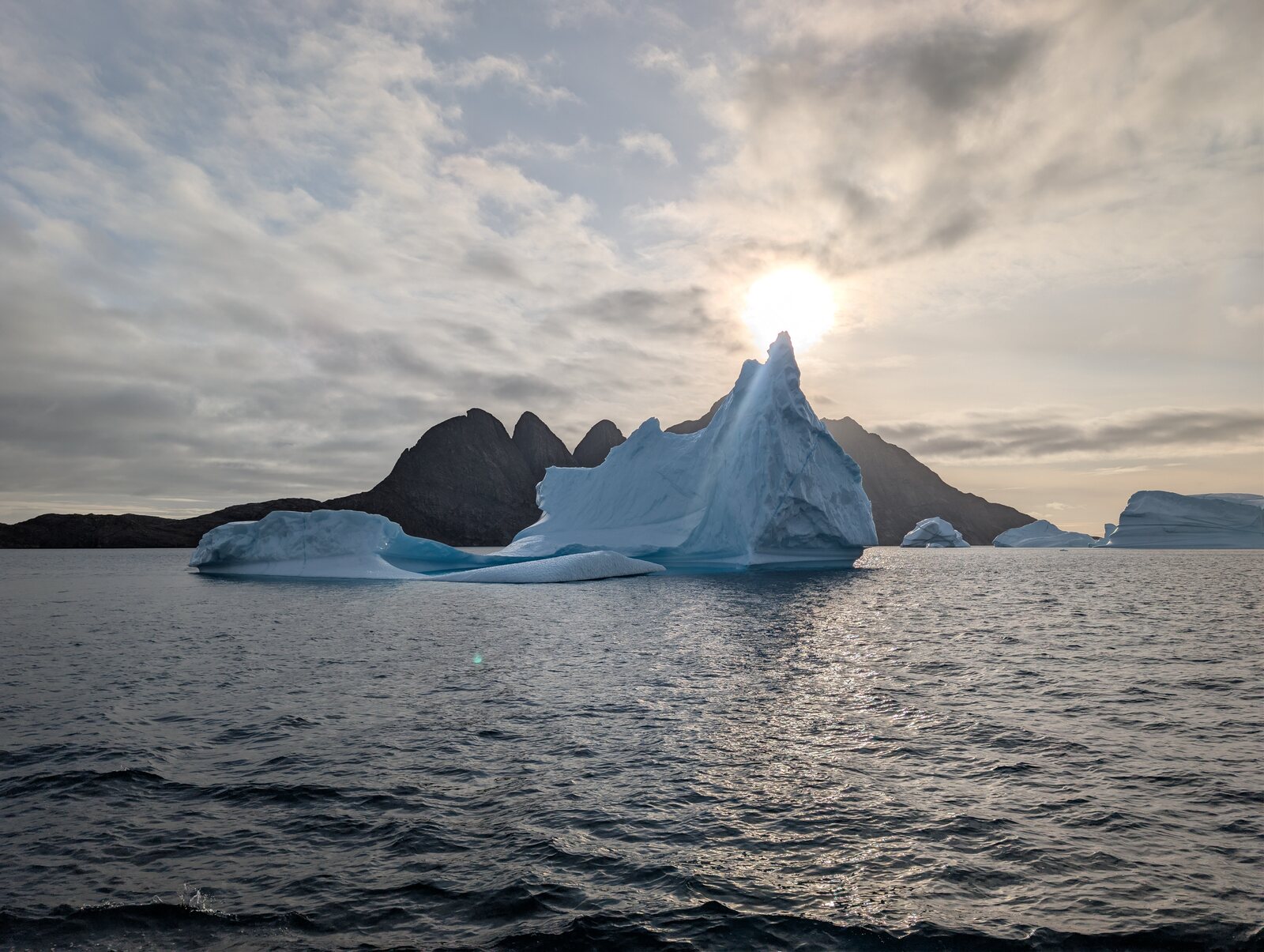
On Sunday, we sailed among more icebergs.
By then, “beautiful icebergs” had become an inadequate but frequently used description.
Everywhere we looked there was another one.
People aboard were flying drones and reviewing images that showed the landscape from perspectives I couldn’t capture with my phone.
I developed drone envy.
Then Oliver showed me how to climb the mast.
Oliver was 17 and already working his third season aboard Linden.
Much of the crew was young—some looked college-aged—and everyone seemed to do several jobs.
Sail the ship.
Drive the Zodiac.
Prepare meals.
Bake bread.
Guide hikes.
Watch for polar bears.
It was a very different version of young adulthood from the one many people experience in the United States.
Not necessarily better or worse.
But certainly different.
And there I was, climbing a mast in East Greenland under the supervision of a 17-year-old.
Bear Island
The weather turned gloomy on August 31.
Someone spotted muskoxen, but they disappeared over a ridge before I saw them.
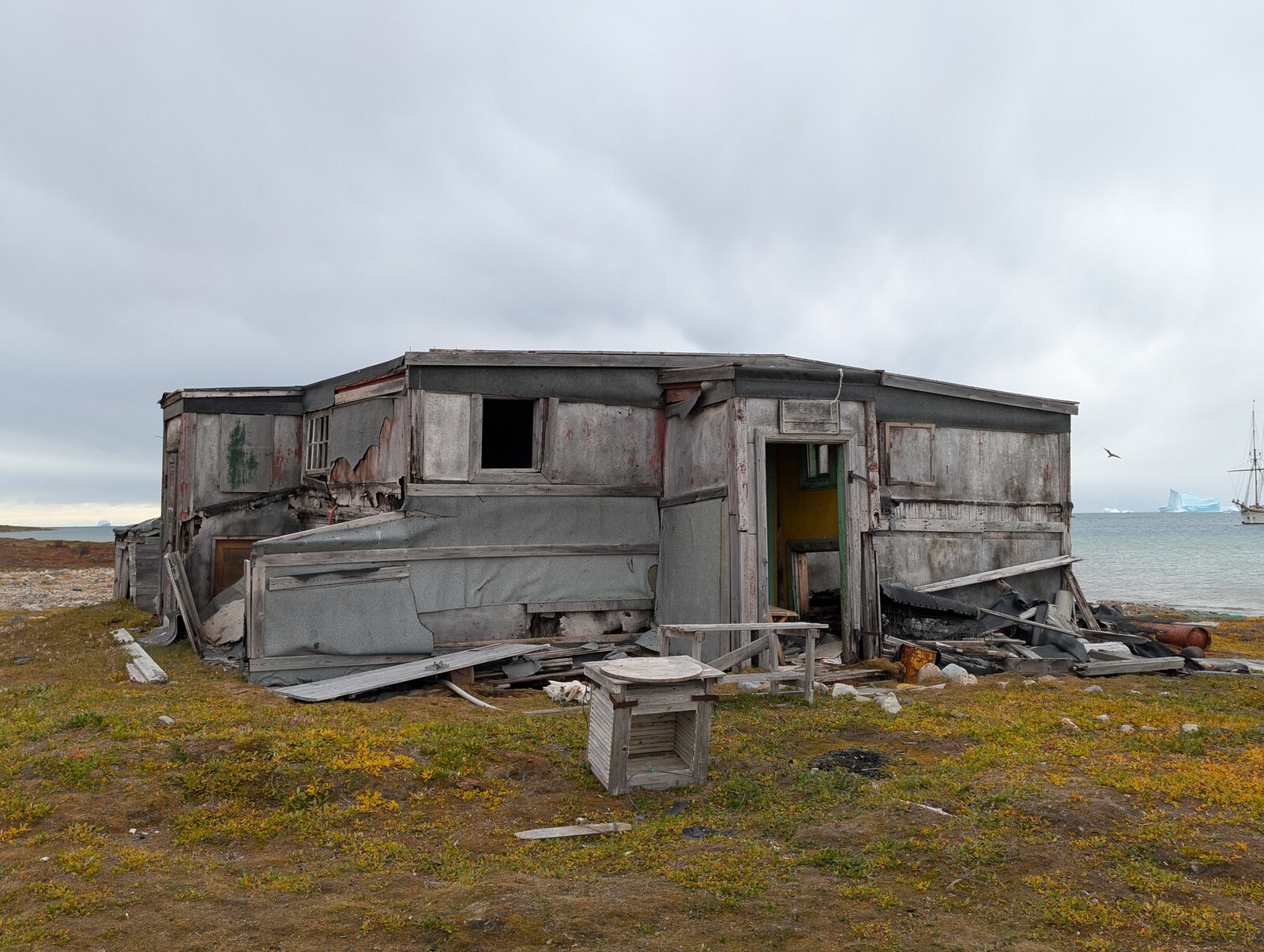
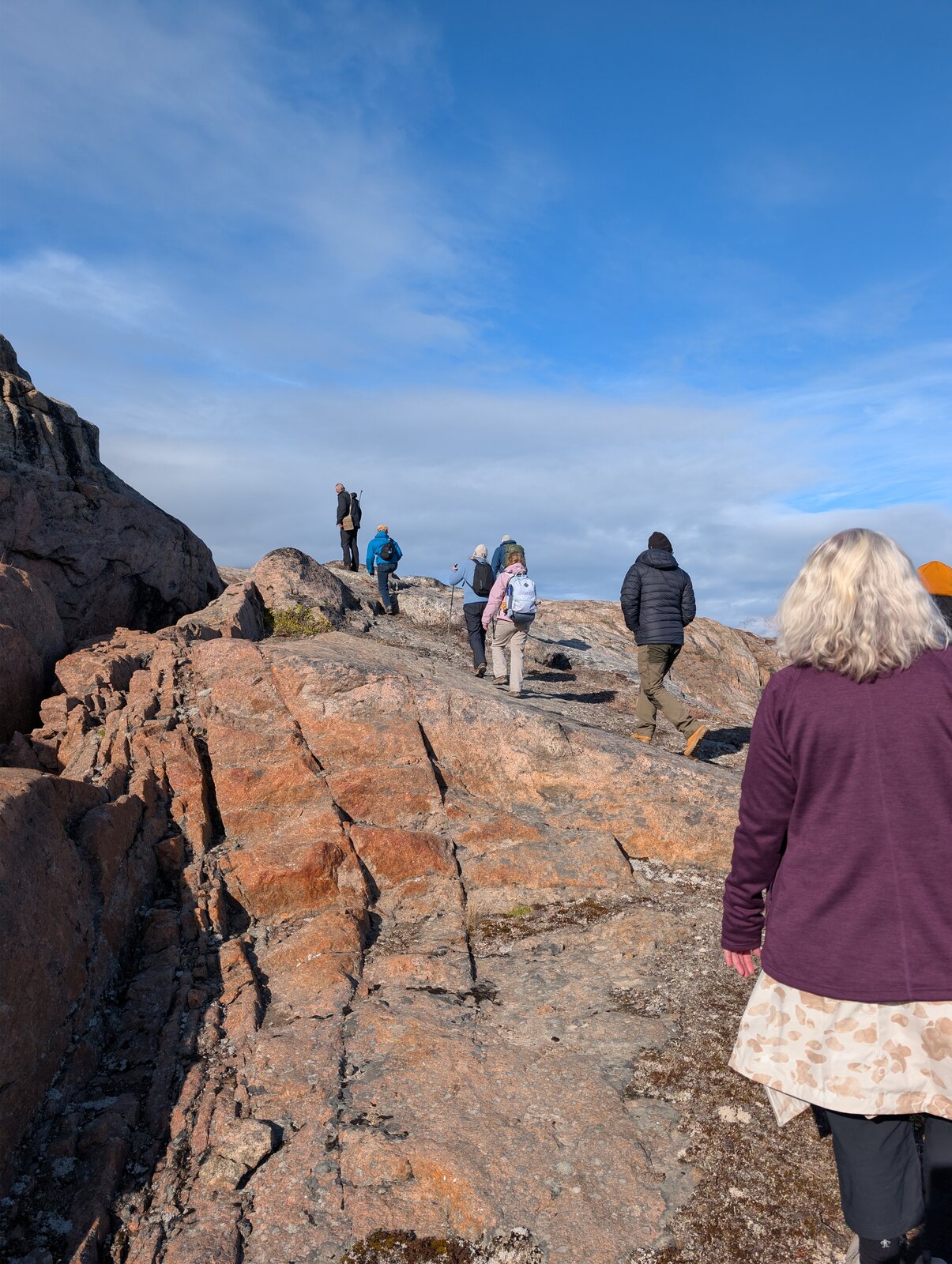
We went ashore near an abandoned research station and climbed to higher ground.
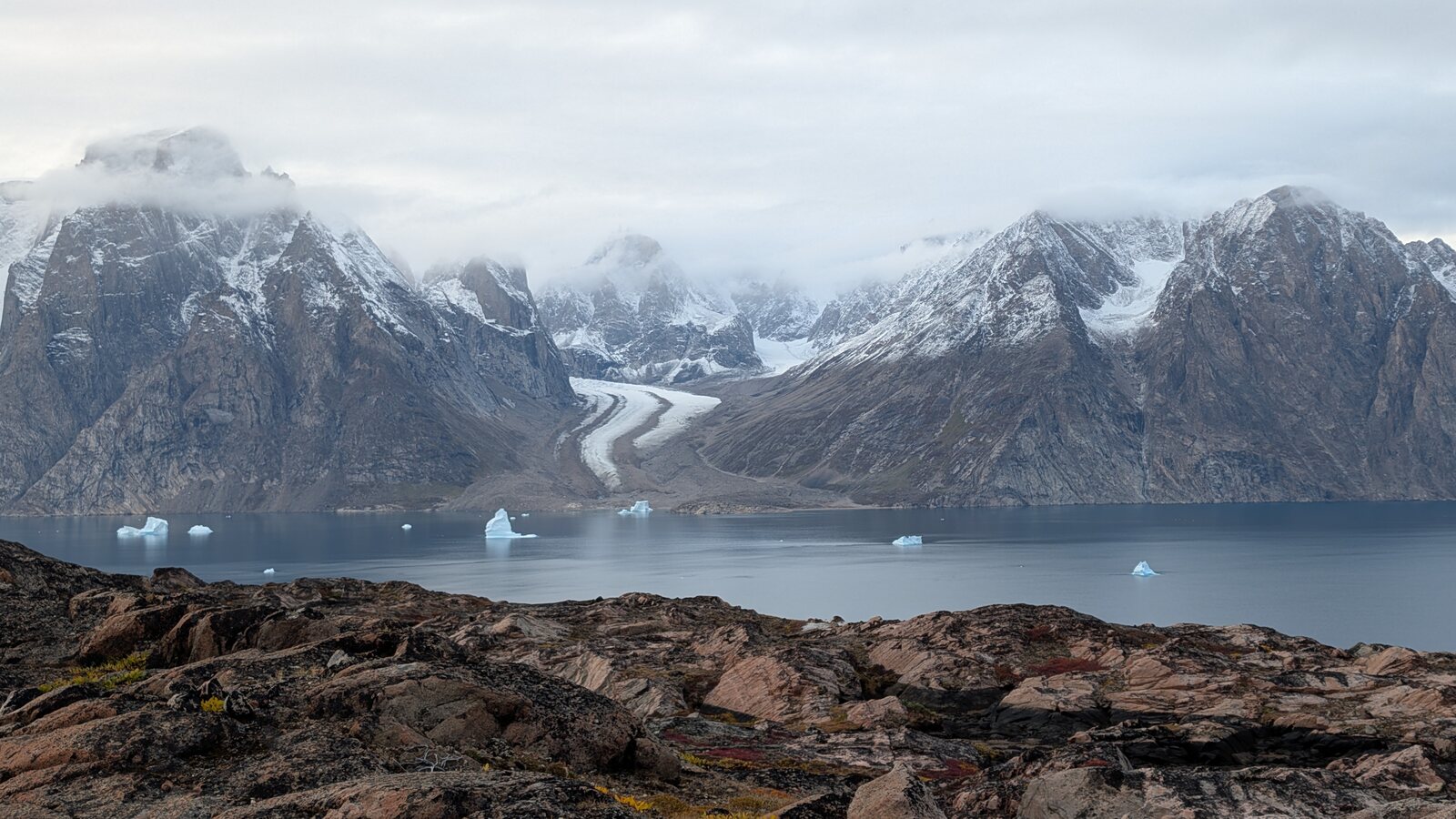
The elevation gave us a different perspective on the water, mountains and ice.
Later, we landed on Bear Island and went for a walk of about five miles.
The landscape was enormous.
“Epic” was the word I wrote in my notes.
That didn’t capture it either.
There were no marked trails.
No visitor center.
No road waiting to take us back to a town.
Just undulating hills, mountains, water and ice—and very few signs that people had ever been there.
Our guide carried a .308 rifle in case we encountered a polar bear.
I wondered what the excursion description would have said if we’d been aboard the Norwegian Joy. Maybe something like:
Greenland Adventure Hike: Activity Level Moderate
Walk through the undulating hills of East Greenland.
Be the first person on the trail.
Because there is no trail.
Your guide will carry a .308 rifle to protect you from polar bears.
At one point, we spotted a small cruise ship in a nearby fjord.
I joked that Shirley was going to run after it and ask them to take her in.
We laughed.
But I think she would have sent up a flare if she’d had one.
The following day we hiked in another part of Bear Island and saw archaeological remains from people who had periodically used the beach over the last several hundred years.
There were shallow trenches where shelters once stood and stone structures that had been used to store meat away from animals.
They weren’t dramatic ruins.
But standing there made the remoteness of the place feel different.
People had lived and traveled through this landscape long before we arrived with cameras, waterproof clothing and a sailing ship waiting offshore.
Sunrise and an Iceberg
On our final full morning aboard Linden, I woke early for sunrise.
I was glad I did.
The light was beautiful.
Then I heard an iceberg calving nearby.
I managed to get a short video.
The wave rocked Linden hard enough that Oliver came running out from preparing breakfast to find out what had happened.
It also woke several sleeping guests.
Apparently the iceberg had provided the wake-up call.
Later, I got to “help” raise the sails.
They were heavy.
Very heavy.
There is a difference between sailing on a ship and being useful aboard one.
I was mostly sailing on it.
Leaving Greenland
On September 3, we woke anchored near Constable Point.
Our flight was delayed, so we remained aboard until late afternoon.
It was hard to describe the scale and emptiness of the place.
Perhaps parts of it weren’t entirely different from the backcountry in a large national park.
But in a national park, civilization might be an hour’s drive away.
Here, there was no road.
There was barely an airport.
Eventually we boarded the flight back to Iceland.
Shirley was ready to leave.
She was glad she had seen Greenland, but this wasn’t a trip she would choose to repeat.
I understood.
Life aboard Linden kept us close to the experience.
It also kept us close to twelve other passengers, a young crew and the realities of living on a small sailing ship.
There wasn’t much personal space.
There wasn’t anywhere else to go.
Greenland was spectacular.
The ship was an adventure.
And after a week, Shirley had had enough adventure.
What We’ll Remember
We’ll remember walking from the Constable Point airport to the Zodiac.
We’ll remember our first morning anchored near Ittoqqortoormiit.
We’ll remember joking that ICE was racing toward the ship—only to discover that the Zodiac was delivering bags of musk ox meat.
We’ll remember hearing, repeatedly, that “the vegetables” didn’t make it.
We’ll remember musk ox ribs and stew, the captain’s venison, a leg of jamón, a wheel of Parmesan and many bottles of Champagne.
We’ll remember watching a polar bear swim ashore and explore an abandoned settlement.
We’ll remember the whale carcass, the dead cub and the bears gathering along the shore.
We’ll remember racing into our gear after Joe woke us at 6:40.
We’ll remember Laura and me floating in a Zodiac beside an enormous iceberg, with the moon framed inside its arch, shooting stars crossing the sky and the northern lights beginning to appear.
We’ll remember the bear on the hillside that looked like a grain of rice.
We’ll remember beautiful icebergs becoming so common that the words stopped being adequate.
We’ll remember my drone envy.
We’ll remember 17-year-old Oliver showing me how to climb the mast.
We’ll remember hiking across Bear Island with no trail and a guide carrying a .308 rifle.
We’ll remember seeing the small cruise ship in the next fjord and joking that Shirley was ready to run after it.
We’ll remember the abandoned research station and the stone remains of shelters and meat-storage structures.
We’ll remember sunrise on our final full day.
And we’ll remember the iceberg calving close enough to rock the ship and wake the guests.
Mostly, we’ll remember how empty Greenland felt.
Mountains.
Icebergs.
Water.
A few people aboard a small ship.
And almost nothing else.
Would We Return?
Shirley wouldn’t choose this trip again.
I might.
I loved having the opportunity to see East Greenland this way—to sail into remote bays, go ashore where there were no trails and experience the landscape without a large expedition ship between us and everything around us.
But if I returned, I might choose a more comfortable ship.
It would create a little more distance from the experience.
After a week aboard Linden, that no longer seemed entirely bad.
Greenland was one of the most beautiful and remote places we had ever visited.
We were fortunate to see polar bears, icebergs, the aurora and landscapes that relatively few people will ever walk through.
I’m glad we went.
I’m glad we went aboard Linden.
And Shirley was very glad to get off.